

Quick Answer
Red light therapy for skin works through photobiomodulation — red and near-infrared wavelengths interact with mitochondria to support cellular energy, circulation and repair. It doesn't treat the underlying cause of a skin issue, but it can support the skin's ability to function, respond and recover, particularly with consistent, appropriately dosed use such as with a compact panel like the Recover RP600.
People come to red light therapy for a multitude of reasons — recovery, sleep, general wellbeing, inflammation, performance and increasingly, skin health.
One of the more interesting reasons we've heard recently is from people whose skin has simply changed.
A sudden breakout. Increased redness or irritation. Changes in texture. Skin becoming more reactive. Or an existing skin issue suddenly becoming more noticeable.
Often, people aren't necessarily looking for red light therapy to eliminate a particular condition. They're looking for another way to support their skin while they manage what's happening.
And this is where the way red light interacts with our cells becomes particularly interesting — this is the science of photobiomodulation, and it's the foundation of everything red light therapy for skin is built on.

Looking Beyond the Surface
When something changes with our skin, our first instinct is usually to treat what we can see.
Creams, cleansers and topical treatments all have their place, but healthy skin also depends on what is happening beneath the surface.
Red and near-infrared wavelengths can penetrate into the skin, where the light can interact with cellular processes, including mitochondrial signalling.
Mitochondria are responsible for producing much of the usable energy our cells need to function.
The interaction between light and these cellular processes is known as photobiomodulation.
Rather than simply doing something to the surface of the skin, we're providing a light stimulus that can influence how cells function and communicate.
Why This Matters for Skin?
Our skin is constantly working.
Cells are renewing themselves, repairing damage, maintaining the skin barrier and responding to inflammation and environmental stress. All of this requires energy.
Photobiomodulation has been studied for its effects on mitochondrial activity and cellular signalling, with potential downstream effects involving circulation, inflammatory signalling, oxidative stress and tissue repair.
This doesn't mean that increasing cellular energy suddenly removes the underlying cause of a skin problem.
The more interesting question is:
If our skin is struggling, can supporting the cellular environment help it function, respond and recover more effectively?
That's a much better way of understanding the potential role of red light therapy in skin health.
When Your Skin Suddenly Changes?
This is something we've heard increasingly from our customers.
Their skin has suddenly started behaving differently.
It might be breakouts, redness, irritation, changes in texture or an existing issue becoming more noticeable.
There can be countless reasons for this. Hormones, stress, sleep, diet, environmental exposure, skincare products, medication and underlying health issues can all potentially influence the skin.
Red light therapy isn't there to diagnose or remove those causes.
Instead, it can be considered another supportive input while the skin is trying to manage, repair and recover.
And because photobiomodulation isn't limited to one single cellular pathway, its potential relevance to skin goes beyond simply how the skin looks.
For a broader look at how this therapy works across the body, our guide to what red light therapy is and how red light therapy can help you cover the fundamentals in more depth.
What Might You Notice?
Changes from red light therapy aren't necessarily dramatic or immediate.
Someone may initially begin using it because of a breakout or irritation and gradually notice other changes too.
Their skin may appear calmer. Redness might become less noticeable. An area of irritation may seem to recover more readily. Skin texture might gradually change, or their skin may simply feel more resilient.
Not everyone will experience the same response, and the underlying cause of someone's skin problem remains important.
But this is what makes the cellular mechanism behind red light particularly interesting.
We're not simply trying to mask something on the surface. We're providing a stimulus to biological processes involved in how the skin functions.
Consistency Is Where It Gets Interesting
Red light therapy isn't really about what happens after one session.
Much like exercise, nutrition, sauna or many of the other positive inputs we give our bodies, it's repeated exposure over time that becomes interesting.
You wouldn't expect one workout to make you fit.
Each workout provides a stimulus. The body responds, recovers and adapts, and then another workout provides a fresh stimulus.
Red light therapy can be thought about in a similar way.
Each session provides a light stimulus. Cellular responses occur, and the body has an opportunity to respond before the next exposure.
The light itself isn't accumulating inside the body.
It's the responses to repeated exposures that can build over time.
This helps explain why someone might initially notice very little and then gradually begin to notice changes in how their skin looks, feels or responds after a period of consistent use.
Provide the stimulus. Allow the response. Repeat.
Making Consistency Practical
If repeated use matters, making red light therapy easy to incorporate into everyday life becomes important.
And if your primary reason for using red light is your face, skin or another targeted area, you don't necessarily need a large full-body setup.
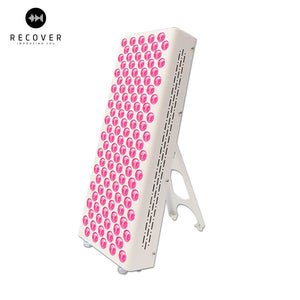
The Recover RP600 Facial Red Light Therapy Panel is compact, portable and designed specifically for facial and targeted use.
It combines 660nm red light with 850nm near-infrared light, allowing two different wavelengths to be delivered across the targeted area.
Because it's small and portable, using it doesn't need to become an event.
It can sit at home, beside your desk or wherever it naturally fits into your routine. That makes regular use — and, where appropriate for the chosen exposure and protocol, shorter sessions more than once during the day — much more practical.
For someone using red light to support their skin, that accessibility can be important.
Rather than booking an occasional treatment, you have the ability to make red light a regular part of your routine.
Portable. Targeted. Easy to repeat.
If you're comparing panels for face versus full-body use, see our guide to choosing the perfect red light therapy panel for your wellness goals, or browse the full range of red light therapy panels.
More Isn't Always Better
Consistency doesn't mean simply using as much red light as possible.
Photobiomodulation is dose dependent. Research has demonstrated what's known as a biphasic dose response — too little exposure may not provide sufficient stimulus, while continually increasing the dose doesn't necessarily produce a greater response.
The objective is therefore appropriate, repeatable exposure, rather than simply maximising every session.
This is another reason a regular routine can make more sense than occasional excessive exposure.
What About Specific Skin Conditions?
There is an important distinction between supporting skin health and claiming to treat a medical condition.
Conditions such as eczema, psoriasis, vitiligo and persistent acne can have complex underlying causes involving genetics, hormones, immune function, inflammation, oxidative stress and other factors.
Some also have established medical phototherapies using completely different wavelengths of light.
Red and near-infrared therapy shouldn't replace appropriate medical treatment or investigation, particularly where a skin change is sudden, persistent or unexplained.
But that doesn't make cellular support irrelevant.
For someone managing an ongoing skin concern, red light therapy may provide another way of supporting some of the cellular processes that healthy skin relies upon.
That's the distinction we think is important.
We're not asking:
“Can red light eliminate this condition?”
We're asking:
“Can supporting cellular function help the skin manage, respond and recover?”
Give the Process Time
Our biology rarely changes because of one isolated input.
Whether we're talking about exercise, nutrition, sleep, sauna or red light therapy, consistency matters.
Red light therapy provides the stimulus.
Your cells create the response.
And regular, appropriately dosed exposure provides a fresh stimulus for that process to happen again.
So whether you're exploring red light because of a recent breakout, changes in your skin or simply because you want to support healthier skin over the longer term, don't judge the process by what happens after one session.
Support the cells. Repeat the stimulus. Give the body time to respond.
To see the wider evidence behind this therapy, read does red light therapy actually work and our dedicated look at the beauty benefits of red light therapy in Dubai.
Frequently Asked Questions
Q 1. How long does it take to see results from red light therapy for skin?
Changes are rarely immediate. Most people notice gradual improvements — calmer skin, less noticeable redness, or a more resilient feel — over weeks of consistent, repeated sessions rather than after a single treatment.
Q 2. Can red light therapy help with sudden breakouts or reactive skin?
Red light therapy doesn't diagnose or remove the underlying cause of a breakout, but it can act as a supportive input while the skin manages, repairs and recovers, alongside your existing skincare routine.
Q 3. Is more red light therapy always better?
No. Photobiomodulation follows a biphasic dose response, meaning too little exposure may under-stimulate the skin while excessive exposure doesn't necessarily improve results. Appropriate, repeatable sessions matter more than maximising every session.
Q 4. Which Recover panel is best for facial and skin use?
The Recover RP600 Facial Red Light Therapy Panel is compact and portable, combining 660nm red light with 850nm near-infrared light specifically for facial and targeted skin use.
Q 5. Should red light therapy replace treatment for a diagnosed skin condition?
No. Conditions such as eczema, psoriasis, vitiligo or persistent acne should continue to be managed with appropriate medical treatment. Red light therapy is a supportive input for cellular function, not a replacement for diagnosis or clinical care.
Support Your Skin, One Session at a Time
Explore the compact Recover RP600 Facial Red Light Therapy Panel, or browse the full range of red light therapy panels to find the right fit for your routine.







Leave a comment
This site is protected by hCaptcha and the hCaptcha Privacy Policy and Terms of Service apply.