

You own a red light panel, or you are thinking about one. You train hard and have 10 spare minutes. So when should you use it: before the session, or after it? The research leans one way, but with some honest limits.
Use red light therapy before a workout if your main goal is strength and performance. Most trials applied it before exercise, and one 12-week study found the best strength gains that way. Use it after training if soreness is your main concern, since a 2026 meta-analysis found less soreness immediately and at 24 hours when applied around exercise. Consistency matters more than perfect timing.
Before or After: The Research in One Table
Red light therapy is also called photobiomodulation. Sports studies usually test red and near-infrared light on muscles around exercise. Here are the four studies that matter most for this question.
| Study | Size | Key finding |
|---|---|---|
| Leal-Junior, 2015 | 13 trials | Better performance and recovery markers, "mainly when applied before exercise" |
| Vanin, 2016 | 48 men, 12 weeks | Light before training gave enhanced strength gains compared with after or both |
| Vanin, 2018 | 39 trials, 861 people | Some benefit, but evidence quality was very low to moderate |
| Science & Sports review, 2026 | 13 trials | Better muscle strength for days, less soreness only early on |
How could light change a workout?
Researchers think red and near-infrared light may act on cytochrome c oxidase, an enzyme in the mitochondria that make energy for your cells. The 2026 review summary calls this a possible explanation, not a proven one. If the idea holds, light before exercise could prepare muscle for work, while light afterwards could support repair. That is why both timings are worth testing.
The Case for Using Red Light Before a Workout
Pre-workout has the most research behind it. In the 2015 Leal-Junior review, 12 of 13 trials applied light before exercise. Compared with placebo, people completed more repetitions and lasted slightly longer before exhaustion.
That last number is important. If nearly every trial tests "before", then "before" will have the most positive results. It does not prove "after" fails.
The trial that compared timing directly
The most useful study is the 12-week randomised, placebo-controlled trial by Vanin and colleagues. It followed 48 men doing strength training. Groups received real light or placebo before, after, or both before and after each session.
The group that had real light before training and placebo after showed the best changes in leg extension and leg press strength. The authors concluded that strength gains improve when light is applied before exercise. They also reported no apparent side effects.
It is one small trial in young men, using thigh muscles. But it is the clearest answer we have.
The Case for Using Red Light After a Workout
Using it after training is not wasted time. A 2026 meta-analysis of 13 trials looked at light applied before or after exercise, compared with sham light. Muscle strength recovered better at every point measured, from straight after exercise up to 96 hours.
Red light vs sham light: what improved, and when
| Outcome | Right after | 24 hrs | 48 hrs | 72 hrs | 96 hrs |
|---|---|---|---|---|---|
| Muscle strength | Better | Better | Better | Better | Better |
| Self-rated soreness | Better | Better | No clear change | No clear change | No clear change |
| Pressure pain threshold | Better | No clear change | Better | Better | Better |
Reported by FoundMyFitness from the 2026 review (DOI: 10.1016/j.scispo.2026.07.001). Timing was mixed across trials, so this does not compare before with after.
Soreness did not change clearly after the first day. So do not expect it to remove the deep leg ache two days after a hard session. That is where sleep, food and easy movement still matter. See how to use contrast therapy around your training for other options.
Compare our lab-tested panels and see which size fits your gym corner.
What These Studies Cannot Tell You?
Be careful with anyone who claims certainty here. The 2026 review's own authors say no single approach fits everyone. Keep these limits in mind.
- Mostly men: the 2026 evidence mostly involved healthy, active men and leg muscles. Women are under-studied.
- Different devices: trials used lasers, LEDs or both, often on set spots. Most did not test the full-body panels people use at home.
- Different doses: the 2026 review found no consistent link between total energy and effect.
- Quality: the 2018 review rated evidence as very low to moderate, citing small samples and varied methods.
The 2018 review does give a useful range. Most positive results used wavelengths of 655 to 950nm. Doses were 20 to 60 joules for small muscle groups and 60 to 300 joules for large ones, using up to 200mW per diode. Those figures come from small probe devices, so they do not convert neatly to a panel. Still, 660nm and 850nm panels do sit inside that wavelength range.
When to Use Red Light Therapy, by Goal?
| Your goal | Best timing | Why |
|---|---|---|
| Build strength | Before training | Direct 12-week trial support |
| Do more reps, last longer | Before training | Most performance trials used this timing |
| Ease next-day soreness | Before or after training | Soreness benefit seen up to 24 hours, with mixed timing |
| Fit it around a busy day | Whenever you can repeat it | A habit you keep beats a perfect plan you drop |
| Train twice in one day | Before the harder session | Our practical suggestion, not a tested protocol |
If your schedule changes each week, do not stress about it. Use the panel before training when you can, and afterwards when you cannot. Missing the ideal window is far less of a problem than giving up altogether.
Should you do both?
You can, but the 12-week trial did not find that "both" beat "before only". If time is short, one session is enough.
Where it fits with cold and heat
We found no strong trial on the best order for red light with an ice bath or sauna. A simple approach is red light before you train, then your usual recovery later. Read whether to cold plunge right after training and how to build sauna into your workout schedule.
Which Panel Suits a Training Routine?
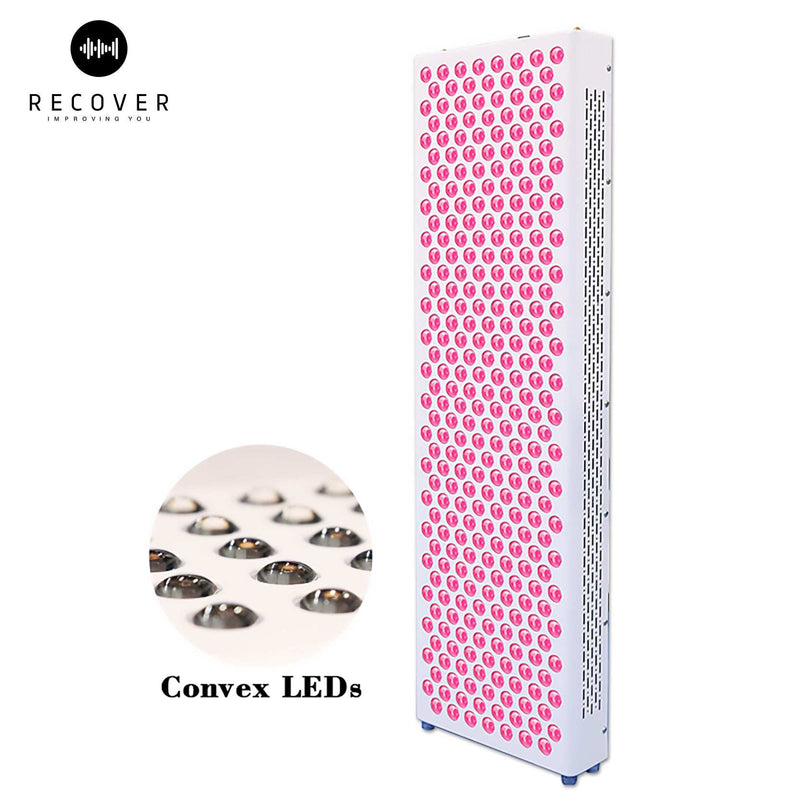
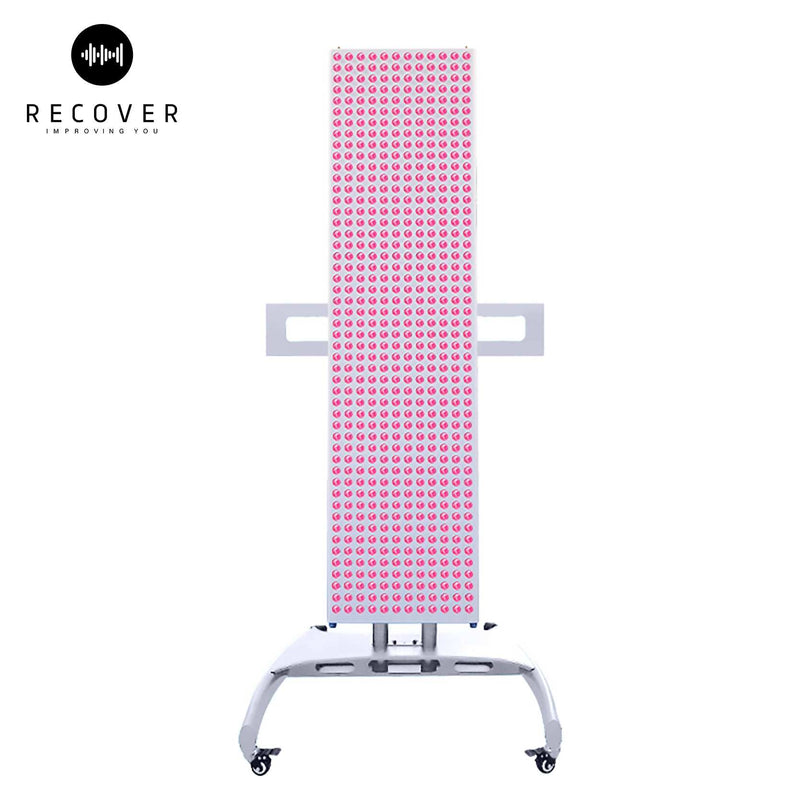
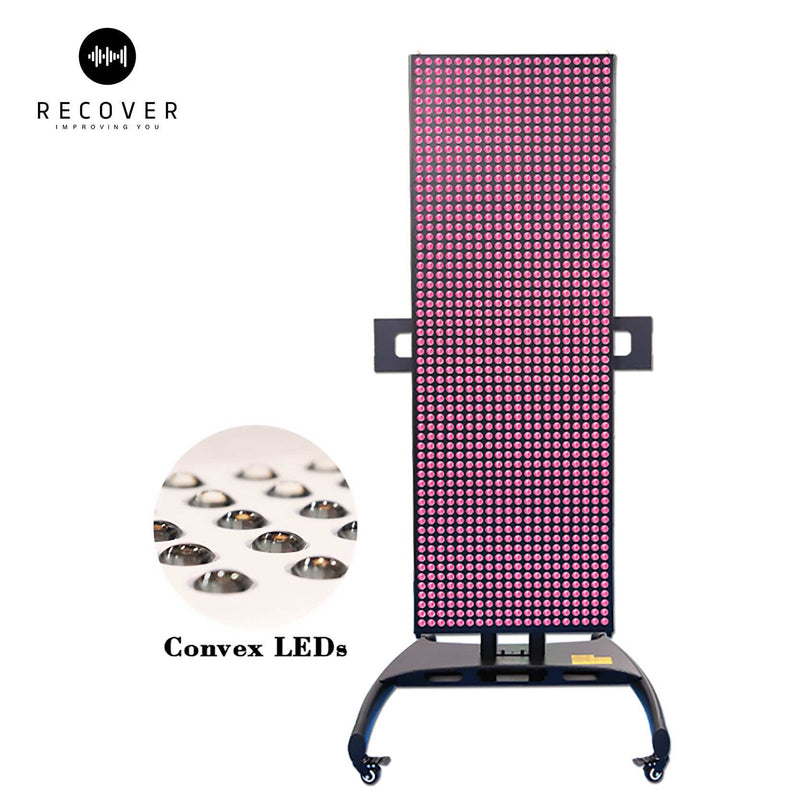
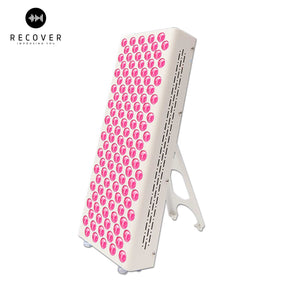
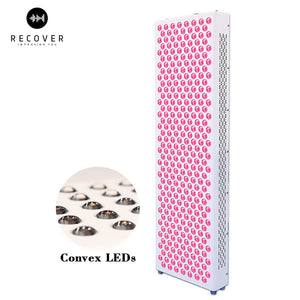
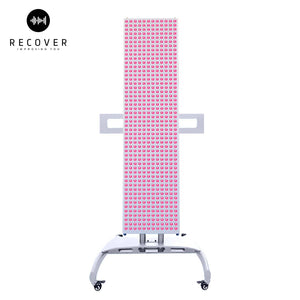
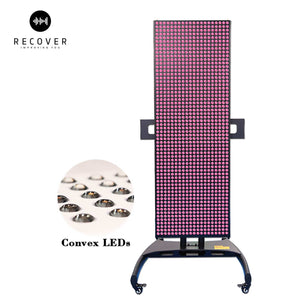
Bigger panels cover more muscle at once, which saves you turning around or moving the panel. Compare the measured output below. Each figure comes from the lab data on our product pages.
Lab-measured irradiance at 30cm (mW/cm²)
From the RP1500, RP3000 and RP5000 product pages. Output changes with distance.
Need more help? Read the full panel buying guide, or see the best home setup for Dubai homes.
How to Use a Panel Around Your Workout
- Start clean. Use it on clean, bare skin over the muscles you plan to train.
- Set your distance. The RP1500 and RP3000 pages suggest 3 to 6 inches from the area. The RP5000 page treats 30cm as a typical full-body distance.
- Set your time. The RP1500 and RP3000 pages list 10 to 20 minutes. Start at the low end.
- Protect your eyes. Do not stare into the LEDs, and wear eye protection.
- Train, then repeat. Stay consistent for several weeks before you judge it.
Getting no results? Check common red light therapy mistakes.
Safety: a 2026 research summary advises people with photosensitive disorders or lupus, and those on photosensitising medicines such as doxycycline, tretinoin or isotretinoin, to avoid it. It also warns about eye irritation and possible dark marks in people prone to pigmentation. Ask your doctor if you are unsure.
A Sample Training Week With Red Light
This example suits someone who trains four days a week at home or at a Dubai gym. It is a practical plan based on the research above, not a tested programme.
| Day | Training | Red light timing |
|---|---|---|
| Monday | Heavy lower body | Before, over thighs and glutes |
| Tuesday | Easy walk or mobility | Optional, on any sore area |
| Wednesday | Upper body | Before, over chest, shoulders and back |
| Friday | Full body or padel | Before, over the muscles you will use most |
| Saturday | Long run or class | After, if a morning start leaves no time before |
| Sunday | Rest | None needed |
3 timing mistakes to avoid
- Skipping your warm-up. Light does not replace one. Finish your session, then warm up as normal.
- Lighting the wrong area. Studies target the muscles being trained. A face panel will not reach your legs.
- Expecting instant results. The clearest strength result came after 12 weeks. Give it time, and track your lifts.
Early-morning gym-goers can keep a smaller panel near the door, so it fits the routine. Evening trainers may also want to read about red light therapy for sleep.
Red Light Therapy and Workout FAQs
Is red light therapy better before or after a workout?
For strength and performance, research favours before. For soreness, trials using either timing show some short-term benefit. If you can only pick one, use it before your hardest sessions.
How long before a workout should I use red light therapy?
Most studies describe applying it before exercise, but there is no agreed gap. A practical choice is to finish shortly before you warm up.
Does red light therapy help muscle soreness?
A 2026 meta-analysis found lower soreness right after exercise and at 24 hours, with no clear difference at 48 to 96 hours. It may help early on, but it is not a complete fix.
Can I use red light therapy every day?
Our RP600 page suggests 3 to 5 times a week, and sports trials vary widely. Build up gradually, and reduce use if your skin feels irritated.
Does red light therapy build muscle?
It does not build muscle by itself. One trial found larger strength gains when paired with 12 weeks of training, so the training still does the main work.
Can I do red light therapy and an ice bath on the same day?
Yes, many people do. No strong trial has identified the best order, so choose a routine that suits your schedule and training goals.
Choose a lab-tested panel for your home gym. Not sure which size? Ask us.
Shop Red Light Therapy Ask Our Team










Leave a comment
This site is protected by hCaptcha and the hCaptcha Privacy Policy and Terms of Service apply.