

Quick Answer
Red light therapy for sleep works mainly through what it doesn't do. Unlike blue-rich light from screens and household bulbs, red wavelengths have much less impact on melatonin production, the hormone that signals to your body that it's time to sleep. Using red light in the evening, instead of bright white or blue light, can support a calmer wind-down and a more natural circadian rhythm. It's not a cure for serious sleep disorders, but it's a simple, genuinely useful part of an evening routine.
Struggling to switch off at night is one of the most common complaints people bring to us. Screens, bright lights, and a mind that won't quieten down.
Red light therapy for sleep has become a popular suggestion. But does shining a red light on yourself in the evening actually change how you sleep?
It's a fair question. Wellness trends move fast, and not every one of them is backed by anything meaningful.
Let's look at what's actually happening with light, melatonin and your circadian rhythm, and how to use red light sensibly as part of a real wind-down routine.
If you've ever felt wide awake after scrolling your phone in bed, you've already experienced this effect first-hand, even if you didn't know exactly why.
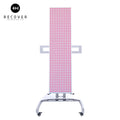
[[product:mid-size-red-light-therapy-panel]]
How Light Affects Your Sleep Cycle?
Your body relies on light as one of its main timing signals. This internal clock is known as your circadian rhythm.
Bright light, particularly blue-rich light, tells your brain that it's daytime. This suppresses melatonin, the hormone responsible for making you feel sleepy.
This system evolved long before electric lighting existed, when the sun was the only major light source. Your body still largely reacts to light today the way it always has, regardless of whether that light comes from the sky or a screen.
Why Blue Light Is the Real Problem?
Screens, LED bulbs and overhead lighting all emit significant amounts of blue-rich light. In the evening, this can delay melatonin release, making it harder to feel naturally tired at bedtime.
This is why so much sleep advice focuses on reducing screen time before bed, it's really about reducing blue light exposure specifically.
Modern life makes this hard to avoid. Kitchens, bathrooms and living rooms are often lit with bright, cool white bulbs well into the evening, right when your body is trying to wind down.
Where Red Light Therapy Fits In?
Red and near-infrared wavelengths behave very differently to blue light when it comes to your body's night-time signalling.
Because red sits at the opposite end of the visible spectrum from blue, it doesn't trigger the same alertness response in the eye's light-sensing cells.
Red Wavelengths and Melatonin
Research on light and circadian rhythm suggests red wavelengths have considerably less suppressive effect on melatonin than blue or white light.
This means using red light in the evening, instead of your usual lamps or screens, may allow melatonin production to continue more naturally as bedtime approaches.
This is part of the same photobiomodulation family of effects we see with red light therapy elsewhere in the body, though here the relevant target is your eyes and your brain's light-sensing pathways, not muscle tissue.
It's Not About the Light 'Fixing' Sleep Directly
Red light therapy for sleep isn't a sedative, and it doesn't force your body to sleep. What it offers is an environment that works with your circadian rhythm, rather than against it.
Think of it less as a sleep switch, and more as removing one of the obstacles standing between you and a natural wind-down.
Building It Into an Evening Routine
The real benefit comes from consistency, using red light regularly as part of your last hour before bed, rather than a single session.
- Dim overhead lights and switch to red light for the final 30–60 minutes before bed.
- Step away from bright screens, or use red light alongside reduced screen brightness.
- Keep the session calm, reading, stretching or simply relaxing works well.
- Pair it with a consistent wake-up time to reinforce your circadian rhythm overall.
Using Red Light Therapy Safely and Effectively
Getting the basics right matters more than any single session.
How Long and How Often?
Most people use red light therapy for 10 to 20 minutes in the evening. Consistency, using it most evenings rather than occasionally, tends to matter more than session length.
As with any light-based therapy, more is not automatically better. A short, appropriately dosed session is more useful than an excessive one.
If you're new to it, start with 10 minutes and see how your evenings and your sleep feel over a week or two, before deciding whether to extend the session.
Try to keep the timing consistent too. Using it around the same time each evening helps reinforce the signal to your body that the day is winding down.
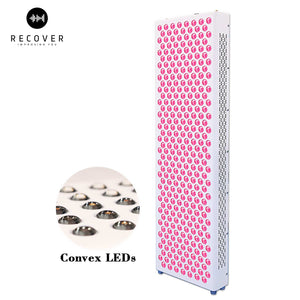
[[product:compact-red-light-therapy-panel]]
Choosing the Right Setup
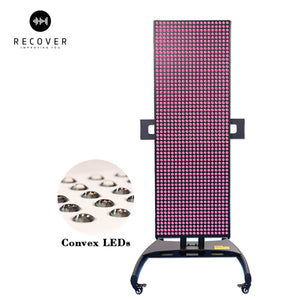
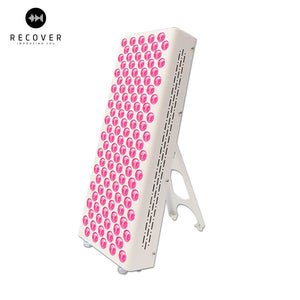
A compact panel makes this far easier to build into a real routine. The Recover RP600 Facial Red Light Therapy Panel is small enough to sit beside your bed or desk, while larger panels like the RP1500 or RP5000 suit a fuller evening wind-down. Browse the full range of red light therapy panels to compare options.
What Red Light Therapy Won't Do?
Red light therapy is not a treatment for insomnia, sleep apnoea or other diagnosed sleep disorders. If you have ongoing, serious sleep problems, speak with a doctor first.
It also won't undo the effects of caffeine late in the day, an irregular bedtime, or a bedroom that's too warm, bright or noisy. It works best alongside good sleep habits, not instead of them.
Think of it as one supportive layer among several, useful, but not a substitute for the fundamentals that already shape how well you sleep.
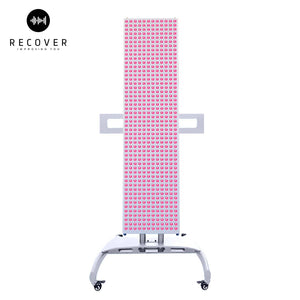
[[product:lux-red-light-therapy-bed]]
Frequently Asked Questions
Does red light therapy actually help you sleep?
It doesn't sedate you directly, but red wavelengths have much less impact on melatonin than blue or white light, which can support a more natural wind-down in the evening as bedtime approaches.
How long before bed should I use red light therapy?
Most people use it for the final 30 to 60 minutes before bed, as part of a calm wind-down routine, for a session of 10 to 20 minutes under the red light itself.
Is red light therapy better than just dimming the lights?
Dimming lights helps too, but red wavelengths specifically have less effect on melatonin than the warm white light from most household bulbs, making it a more targeted option for the final part of your evening.
Can red light therapy replace good sleep habits?
No. It works best alongside consistent bedtimes, reduced screen time and a cool, dark bedroom, not as a replacement for them. Think of it as one supportive habit among several.
Is red light therapy safe to use every night?
Yes, for most people. Red light therapy is non-invasive and considered safe for regular use, though appropriate, moderate dosing matters more than maximising every session, so there's no need to overdo the exposure time.
The Bottom Line
Red light therapy for sleep isn't about a dramatic fix. It's about removing one of the biggest obstacles to a natural wind-down, bright, blue-rich light, at exactly the time your body is trying to prepare for rest.
Used consistently, alongside good sleep habits, it's a simple, low-effort addition to any evening routine.
Small, repeatable habits tend to beat dramatic interventions when it comes to sleep. Red light therapy fits neatly into that category, a small change you can keep up for years, not just a few nights.
If your evenings are currently dominated by bright screens and overhead lighting, swapping even the final 30 minutes for red light is a low-effort place to start, and one of the easiest sleep habits to actually stick with long term.
Explore the Recover RP600 Facial Red Light Therapy Panel or read more on what red light therapy is and how cold plunge therapy improves sleep quality for a fuller evening recovery routine.








Leave a comment
This site is protected by hCaptcha and the hCaptcha Privacy Policy and Terms of Service apply.