
A tub that makes its own ice looks incredible on Instagram. But does colder really mean better? And should you pay thousands more for a system that reaches 0°C? The answer may surprise you, even coming from a company that sells them.
Most people do not need a 0°C ice bath for recovery. A 2016 meta-analysis found the best soreness results at about 11 to 15°C for 11 to 15 minutes. A standard chiller reaching 1 to 3°C already goes colder than that. An ice-producing system is worth considering for its stronger cooling power, which helps in hot outdoor spots and with heavy shared use, or if you personally enjoy colder plunges.
How Cold Should an Ice Bath Be? What the Research Says
The most direct study is a 2016 meta-analysis in Sports Medicine by Machado and colleagues. It pooled nine randomised trials and 169 active people, looking at how water temperature and time affect muscle soreness. Its conclusion was that water at 11 to 15°C for 11 to 15 minutes "can provide the best results".
Two points keep this honest. The authors rated study quality as low, and the effect was small. Also, these trials did not test modern 0°C plunges against 11°C, so the research cannot prove that 0°C is worse. It simply does not show that you need it.
The Cochrane review of cold-water immersion points the same way. Across 17 small trials and 366 people, it found some evidence of less soreness up to 96 hours after exercise compared with rest, but study quality was low.
Our own guide to the ideal ice bath temperature suggests a similar range: about 15°C for beginners, 12°C for balanced recovery and 10°C for advanced users.
What about feeling tougher or more alert?
Many people plunge for mood, focus and mental grit rather than sore muscles, and colder water certainly feels more intense. That is a personal preference and a fair reason to go colder. Just be clear that the research above is about soreness, and it does not show that lower numbers bring more of those benefits.
The Risks of Going Colder
Colder is more stressful for your body. A British Journal of Sports Medicine paper on cold water risks calls cold shock "the most dangerous response" to cold water immersion. It causes gasping, fast breathing, a stress hormone surge, high blood pressure and irregular heart rhythms. The RNLI, the UK's lifeboat charity, says cold shock can occur in water below 15°C, which means every chiller here can reach that zone.
Safe plunge rules at any temperature:
- Get medical advice first if you have a heart condition, high blood pressure or are pregnant.
- Never plunge alone, especially below 10°C. Our temperature guide advises caution and supervision here.
- Keep your face out of the water. The BJSM paper warns that face immersion with breath-holding can trigger irregular heart rhythms.
- Enter slowly and control your breathing. Get out if you feel unwell.
- Do not drink alcohol first.
Timing matters if you lift weights
A 2024 meta-analysis of eight studies found that plunging right after resistance training may reduce muscle growth, although study quality was fair to poor. So if size is your goal, leave a gap whatever your temperature. See whether to cold plunge after training.
Self-Icing Tub vs Ice-Producing Chiller vs Standard Chillers
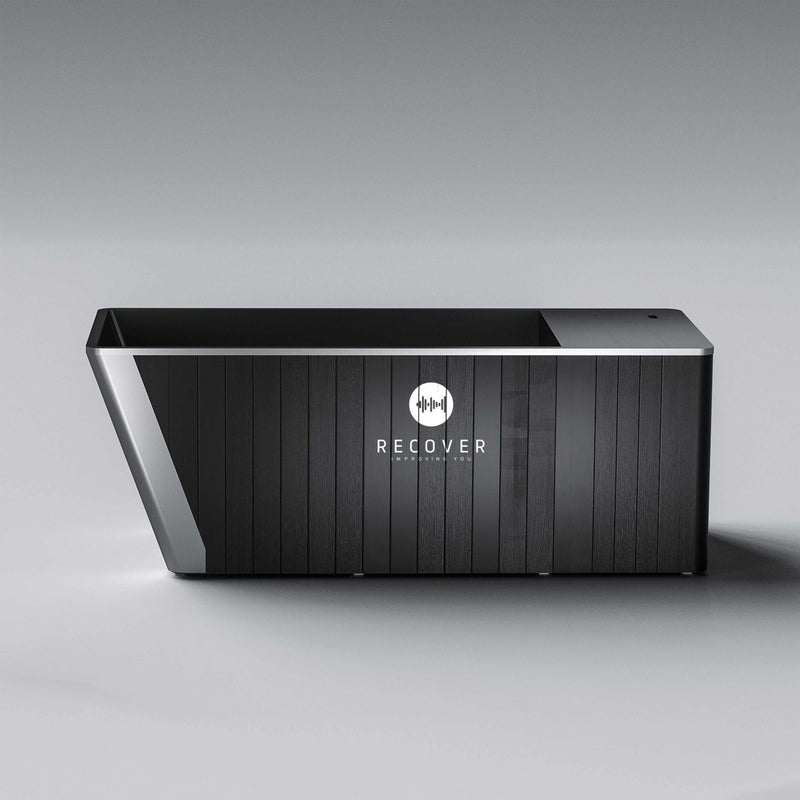
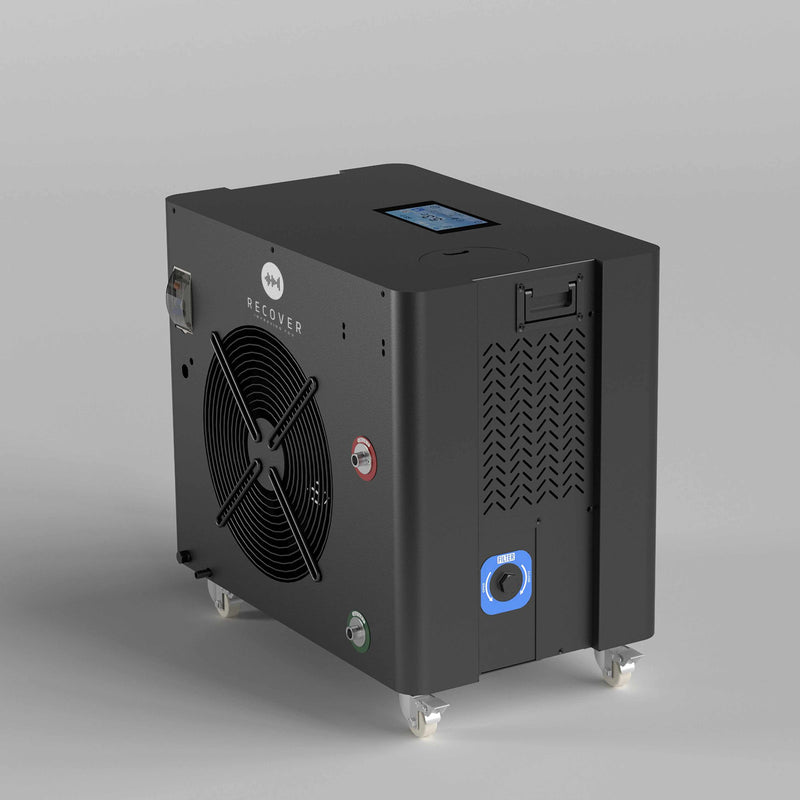
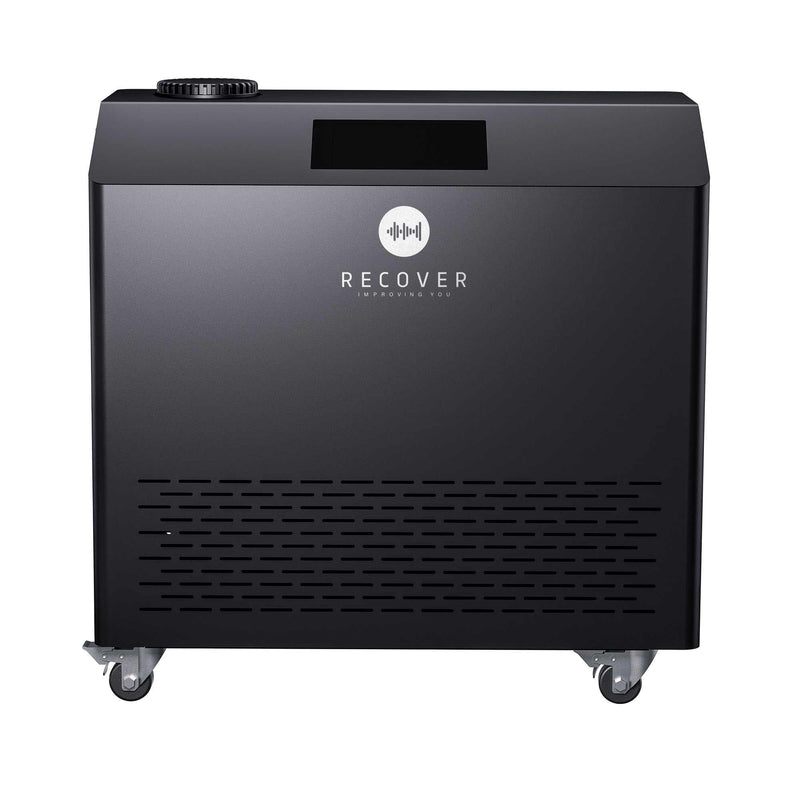
Here is how Recover's options compare. A self-icing tub is one complete unit. A chiller connects to a tub you already own or buy separately.
| Feature | Self-Icing Tub | Ice-Producing Chiller | Advanced Chiller | Eco Chiller |
|---|---|---|---|---|
| Price | AED 27,999 | AED 12,999 | AED 10,999 | AED 8,499 |
| What you get | Tub and cooling | Chiller only | Chiller only | Chiller only |
| Coldest | 0°C | 0°C (ice-making) | 1°C | 3°C |
| Warmest | 45°C | 45°C | 45°C | 42°C |
| Cooling capacity | 5000W | 5000W | 2450W | 2750W |
| Input power | Ask us | 1950W | 1060W | 1150W |
| Water care | 20 micron filter, ozone | Pleated filter cartridge | External filter, ozone | UV and ozone |
From product pages, November 2026. Confirm your tub's compatibility before you buy a chiller on its own.
Is the cost gap worth it?
The ice-producing chiller costs AED 4,500 more than the Eco Chiller. Over five years, that is AED 75 a month. For some users, that is a very fair price for double the cooling. For others, it buys a colder setting they will rarely use. Which camp you fall into depends on the next section.
The Real Benefit Is Cooling Power, Not the Number on the Screen
Here is the idea most buyers miss. The lowest temperature tells you where a chiller can go. Cooling capacity tells you how strongly it can get there and stay there.
Listed cooling capacity (watts)
Source: Recover product pages. Real performance depends on water volume, insulation, shade and air temperature.
That extra capacity can help in three ways:
- Faster cooling: the ice-producing page lists about 3.2 hours to take 300 litres from 28°C to 0°C.
- Hot locations: a tub in a UAE garden picks up far more heat than one in an air-conditioned room.
- Heavy use: each body entering the water adds heat, and shared tubs need quicker recovery between users.
So even if you only ever set 10°C, a stronger unit may hold it more easily in a hot location. If your tub lives indoors, you use it alone and you like 10 to 15°C, a standard chiller may be all you need. See using ice baths outdoors in the UAE for more on this.
Running costs
Our running cost guide estimates about AED 30 to 55 a month for a 300-litre ice bath with an ice-producing chiller held at 0 to 4°C. See its power use in detail. Shade and a good cover can help reduce this.
Tell us your tub size, location and number of users. We will suggest the right chiller.
When a 0°C System Makes Sense?
| Your situation | Is 0°C worth it? | Why |
|---|---|---|
| Outdoor tub in a Dubai or Abu Dhabi garden | Often yes | Stronger cooling helps in summer heat |
| Gym, studio or hotel with many users | Often yes | Extra capacity for repeated use |
| Experienced user who enjoys very cold water | It can be | A personal preference, not a proven need |
| You want everything in one tub | It can be | The self-icing tub keeps it all together |
| Indoor tub, single user, 10–15°C | Probably not | A standard chiller should do the job |
| Beginner on a budget | No | Save the money and learn the basics first |
If you want to run a commercial plunge, read our commercial buyer's guide. For a full view of cost, see how much an ice bath costs in Dubai.
What Temperature Should You Actually Set?
Even with a 0°C machine, you do not have to use 0°C. Treat it as a range and start warmer.
| Your level | Suggested start | Time |
|---|---|---|
| Beginner | About 15°C | 1 to 3 minutes, building up slowly |
| Regular user, soreness goal | 11 to 15°C | Up to 11 to 15 minutes if comfortable, as in the research |
| Advanced user | About 10°C | Shorter sessions |
| Below 10°C | With caution and supervision | Very short sessions |
Our practical guide. Time at each level is general advice, not a research-tested schedule. Stop if you feel unwell.
New to this? Start with getting started with your new ice bath.
5 Questions to Answer Before You Buy
- Will the tub sit indoors with AC, or outside in the sun?
- How many litres will you chill, and how many people will use it each day?
- What temperature will you really set most days?
- Do you already own a tub, or do you need a complete unit?
- Can your electrical supply handle the chiller, and who will check it?
Your answers matter more than the lowest number on the display. Bring them to our team and we can narrow your choice quickly.
Which One Should You Buy?
- Eco Chiller (AED 8,499): best value for most home users, especially indoors. It reaches 3°C, which is far colder than the 11 to 15°C range above.
- Advanced Chiller (AED 10,999): a good choice if you want the wider 1 to 45°C range and built-in ozone.
- Ice-Producing Chiller (AED 12,999): best for outdoor tubs, larger volumes and shared use, if you already have a suitable tub.
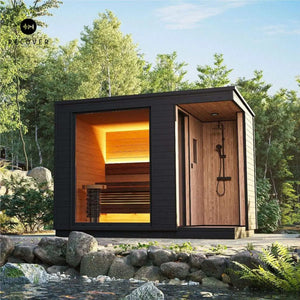
- Self-Icing Tub (AED 27,999): best if you want a complete, premium red cedar and steel unit with hot and cold.
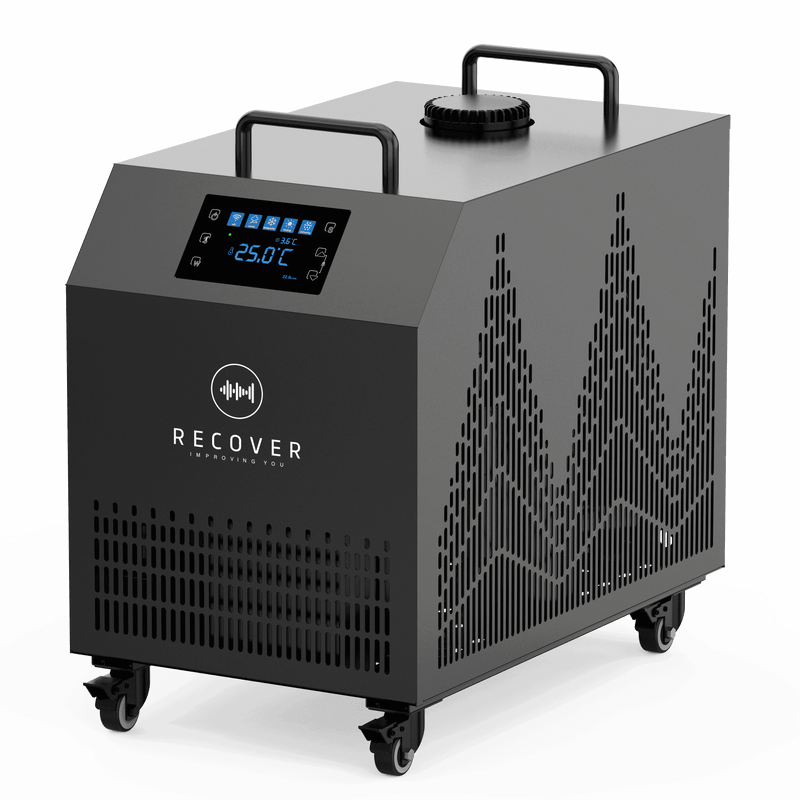
If you already own a bathtub, read how to use a Recover chiller with your existing bathtub.
0°C Ice Bath FAQs
Is a 0°C ice bath better than 10°C?
There is no good evidence that it is better for soreness. A meta-analysis found the best results at 11 to 15°C. Colder water is more stressful, so choose it only if you are experienced and medically cleared.
What is the best ice bath temperature for recovery?
Research points to about 11 to 15°C for 11 to 15 minutes, based on low-quality trials. Beginners should start warmer and shorter, then build up as they get comfortable.
What does self-icing mean?
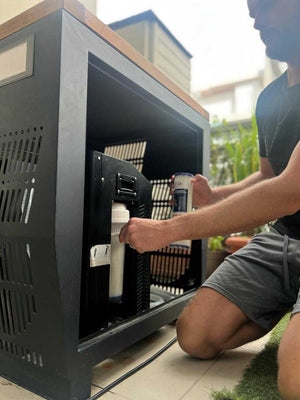
It means the unit's cooling system can take water down to 0°C without you adding bags of ice. Ask our team how much ice to expect in your conditions and how to run it day to day.
Do I need an ice-producing chiller in the UAE?
Not always. It is most useful for outdoor tubs, larger volumes and shared use. For an indoor tub at 10 to 15°C, a standard chiller is usually enough.
How long does it take to reach 0°C?
The ice-producing chiller page lists about 3.2 hours to cool 300 litres from 28°C to 0°C. Your time will depend on starting temperature, shade and insulation.
Is a 0°C ice bath dangerous?
It carries more risk than milder water, including cold shock and heart rhythm problems in vulnerable people. Avoid it if you have a heart condition without medical advice, and never plunge alone.
Tell us where your tub will live and who will use it. We will help you choose the right system for your home or business.
Shop Ice Bath Chillers Shop Ice Baths










Leave a comment
This site is protected by hCaptcha and the hCaptcha Privacy Policy and Terms of Service apply.