

Quick Answer
The Oura Ring 5 is a sleep and recovery-focused wearable that tracks sleep quality, resting heart rate, HRV and a Resilience score that shows how well the body balances stress and recovery over time. It's roughly 40% smaller than Ring 4, has a six-to-nine-day battery life, and is most useful for spotting long-term trends — such as a post-summer dip in resilience — rather than chasing a perfect daily score.
We've been testing the new Oura Ring 5 for a while now, and it's fair to say our favourite everyday health tracker has got even better.
We've used Oura for years, so we already knew we liked the concept. What surprised us with the Ring 5 was just how much more refined the whole experience has become.
The ring itself is considerably smaller and more streamlined, the information feels increasingly intuitive and, most importantly, it continues to get better at the thing we actually use it for:
Understanding sleep, rest and recovery.
For Us, Sleep Is the Real Win
There are plenty of devices that count steps and track workouts.
That's not really why we wear an Oura.
We want to know what happens when we stop.
How well did we actually sleep? How settled was our resting heart rate? What happened to HRV? Was our sleep regular? Did the body actually recover overnight?
There's a big difference between spending eight hours in bed and getting eight hours of genuinely good rest.
Oura makes that difference much easier to see.
And after you've worn it consistently, you begin to understand what a good night's sleep actually looks like for you.
It Starts to Learn Your Normal
This is where Oura gets really interesting.
One HRV reading doesn't mean very much. Neither does one bad night's sleep or an unusually high resting heart rate.
But wear the ring for months and you establish a baseline.
You begin to see what's normal for you — and, more importantly, when things start moving away from it.
Travel. Alcohol. Stress. Hard training. Late meals. Illness. Poor sleep.
They can all start showing themselves in different ways.
And the reverse is true too.
Regular sleep, sensible training, hydration, morning movement and a good recovery routine can gradually start appearing in the longer-term trends.
It's the trend rather than the individual score that we find useful.
Resilience Might Be Our Favourite Feature
One of the things we really love about Oura is Resilience.
It's relatively easy to have a perfect couple of days.
Sleep well. Train. Hydrate. Eat properly. Get outside. Get your recovery right.
The much harder part is doing those things consistently for a month, six months or a year.
Resilience gives you a much better picture of that.
Instead of putting too much importance on one good or bad day, it looks at how well you're balancing physiological stress and recovery over time.
And sometimes it's quite revealing.
Summer Is the Classic Example
Summer is almost the perfect example of how resilience can gradually be chipped away.
Bedtimes change. You're travelling more. Sleep gets disturbed. Meals get later. There's more alcohol. Training becomes less regular and morning routines disappear.
None of those things necessarily feels significant at the time.
But repeat them for several weeks and they start to accumulate.
That's something we've found fascinating to watch through Oura.
There's rarely one terrible day where everything suddenly falls apart. Instead, you can watch your longer-term resilience gradually move as all those little changes begin adding up.
Then you come home.
Regular sleep returns. You start moving early again. You get outside, hydrate properly, eat at normal times and return to training and recovery.
But one perfect Monday doesn't immediately fix everything.
It rebuilds gradually.
For us, that's one of the most useful messages Oura provides.
Health and recovery aren't really about being perfect. They're about what you do often enough for it to become normal.
Our own guide on how to get back on track after summer walks through exactly this kind of reset, week by week.
The Food Log Is Surprisingly Useful
Another addition we've really enjoyed is Meals.
Not because we want to spend our lives counting every calorie we eat. Quite the opposite.
You can simply photograph a meal, upload an image or tell Oura what you've eaten. From there, it starts building another layer into the picture.
What's interesting is being able to connect what and when you're eating with everything else that's happening.
Late dinners. Irregular meal times. Different food while travelling. Your normal eating routine when you're back home.
Oura also looks at things like protein, fibre, processing levels and added sugars, without turning the whole experience into obsessive calorie counting.
For us, that's a much more useful way of looking at food.
It's another piece of context.
You Start Seeing What Affects Your Rest
This is where Oura becomes genuinely useful rather than simply interesting. Have a few drinks and see what happens overnight.
Eat a big meal late and look at how your body settles.
Go through a stressful week and watch what happens to sleep and recovery. Then try the opposite.
Get outside early.
Move in the morning.
Eat at more regular times.
Reduce alcohol.
Get your sleep schedule consistent.
Bring sauna, cold exposure or red light into a regular recovery routine. Then watch what happens over several weeks.
Eventually, you're not simply looking at data.
You're learning how your own body responds.
And That's Where It Can Actually Change Behaviour
This might be the biggest benefit we've found after wearing Oura for years. You start making slightly different decisions because you've seen the outcome before. You know what several late nights in a row tends to do.
You know what alcohol does to your sleep.
You know how you normally respond to travel.
You know what a really consistent week looks like.
And you begin recognising when you're moving away from your normal baseline before you've necessarily reached the point of feeling completely exhausted.
The best thing about Oura isn't necessarily the amount of information it collects. It's what you start doing differently because you've seen that information.
The Ring 5 Itself Is Much Better
The hardware improvements are immediately noticeable.
Oura has made Ring 5 around 40% smaller by volume than Ring 4. It's thinner, lighter and feels much more like a normal ring.
For us, that's a bigger improvement than it might initially sound.
If the information you're most interested in is being collected while you're sleeping, you need something comfortable enough that you're happy wearing it every night.
The Ring 5 is incredibly easy to forget you're even wearing.
And despite getting considerably smaller, battery life remains excellent at around six to nine days, depending on use.
It Doesn't Need Another Screen
This is another reason we've always liked Oura.
No emails.
No WhatsApps.
No notifications constantly appearing on your wrist.
There's nothing asking for your attention.
It quietly gathers information in the background and you look at it when you want to.
For something that's supposed to help you understand stress, sleep and recovery, we think that's exactly how it should work.
Don't Become a Slave to the Score
There is one thing we've learnt from wearing Oura for a long time:
Don't obsess over getting a perfect score every morning.
If you wake up feeling great and Oura gives you a slightly lower score, don't suddenly decide you can't train.
Likewise, one brilliant score doesn't necessarily mean everything is perfect. Look at the bigger picture.
What's happened over the last week?
The last month?
The last six months?
That's where something like Resilience becomes so useful.
You can perfect your routine for three days. Building one that still exists a year later is where the real value is.
Why It Fits So Well With Recover?
This is probably why Oura has remained one of our favourite pieces of health technology. It reinforces something we talk about constantly at Recover.
Recovery is cumulative.
One sauna isn't going to transform your health.
Neither is one ice bath.
One red light session.
One workout.
Or one perfect night's sleep.
It's the repeated use, the regular movement, the sleep routine, the hydration, the food, the training and the recovery that gradually add up.
Oura gives you a surprisingly good window into that process.
And the longer you wear it, the more useful that window becomes.
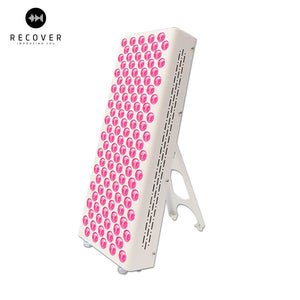
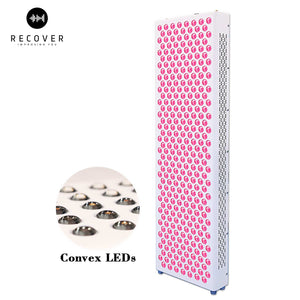
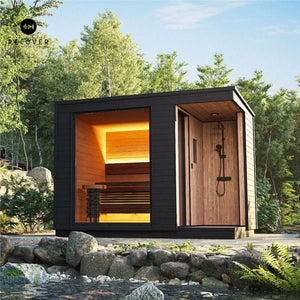
If you're building that repeated recovery routine yourself, see our range of ice baths, home saunas and red light therapy panels, or read about why athletes swear by ice baths after workouts.
Our Verdict
If you want a serious GPS sports watch, there are better tools for that. That's not how we use Oura.
For us, Oura is a sleep and recovery tracker first.
The Ring 5 is smaller, more comfortable and easier to forget you're even wearing, while Oura itself is becoming considerably better at turning all that information into something you can actually understand.
Sleep and quality of rest remain the biggest wins for us.
But Resilience, stress tracking, meal logging and the increasingly personalised interpretation of your data are making the bigger picture much more interesting.
It isn't about achieving a perfect score.
It's about learning what's normal for you, recognising what repeatedly knocks you away from it and understanding the habits that bring you back.
That's why we keep wearing it.
Want to Try It?
We've been using the Oura Ring 5 ourselves and genuinely think it's one of the most useful pieces of health technology we own.
Shop the Oura Ring 5 on Amazon UAE [insert your affiliate link here]
Frequently Asked Questions
Q 1. What does the Oura Ring 5 actually track?
It tracks sleep quality, resting heart rate, HRV, a daily Resilience score, and now meal logging, giving a broader picture of how stress and recovery balance over time rather than just step counts.
Q 2. Is the Oura Ring 5 smaller than the Ring 4?
Yes, Oura has made the Ring 5 around 40% smaller by volume than Ring 4, with battery life still lasting roughly six to nine days depending on use.
Q 3. What is Oura's Resilience feature?
Resilience looks at how well the body is balancing physiological stress and recovery over weeks or months, rather than judging a single good or bad day, making it useful for spotting gradual dips like a post-summer decline.
Q 4. Should I obsess over my daily Oura score?
No. A single lower score doesn't mean you can't train, and a single high score doesn't mean everything is perfect. The bigger picture over a week, month or longer is more useful than any one day.
Q 5. Does Oura Ring 5 work well alongside a recovery routine?
Yes. Many people use it to see how sauna, cold exposure, red light therapy, hydration and sleep habits affect their long-term trends, since recovery tends to be cumulative rather than the result of one session.









Leave a comment
This site is protected by hCaptcha and the hCaptcha Privacy Policy and Terms of Service apply.