
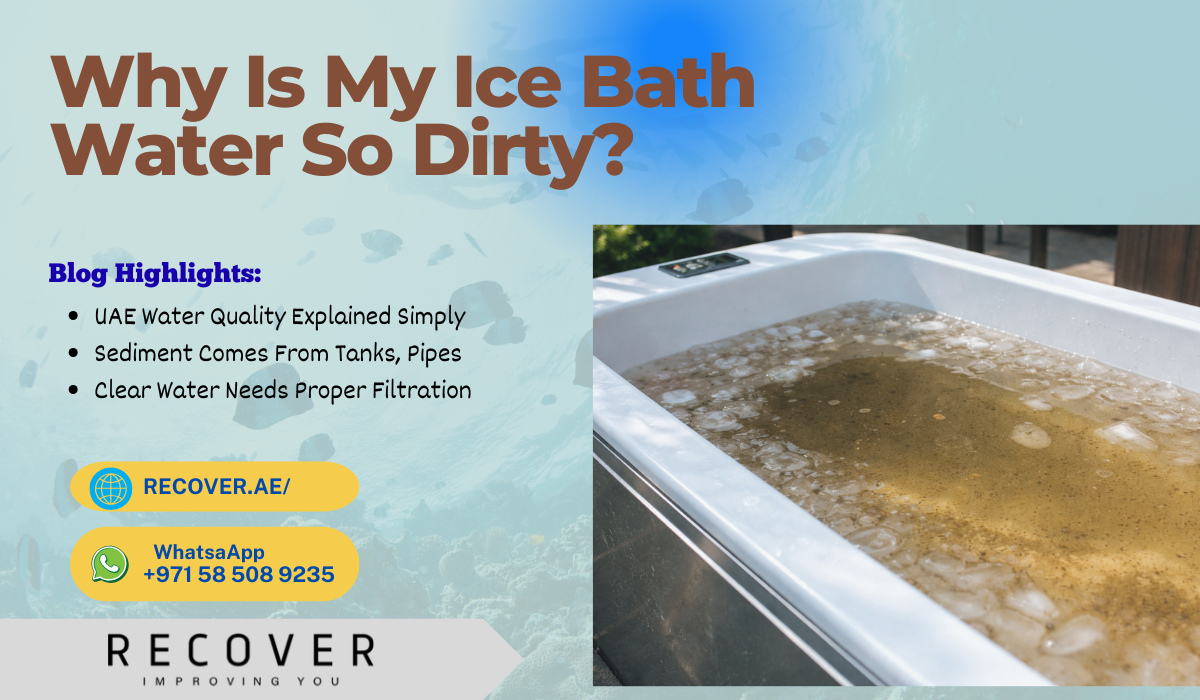
If you’ve filled your ice bath and noticed cloudy water, floating particles, or sediment collecting at the bottom, you’re not alone. This is one of the most common questions we hear from ice bath owners across Dubai, Abu Dhabi, and the UAE.
The good news?
In almost every case, the ice bath isn’t the problem.
The issue is the water entering the ice bath — and ice baths simply make it impossible to ignore.
Ice Baths Expose Water Quality Issues
Ice baths are designed to hold clear, still, cold water. That combination makes even tiny amounts of contamination immediately visible.
What you’re usually seeing is:
- Fine sand or dust
- Mineral sediment from desalinated water
- Residue from building water tanks
- Debris sitting in plumbing lines
You may never notice this in showers or sinks — but an ice bath shows everything.
Why This Happens So Often in the UAE?
In the UAE, water doesn’t go straight from the treatment plant to your tap. Most homes rely on:
- Underground storage tanks
- Rooftop tanks
- Internal plumbing that may sit unused
Over time, these systems collect:
- Sediment and fine sand (common in desert environments)
- Mineral scale from desalinated water
- Biofilm if tanks aren’t cleaned regularly
- Debris stirred up when tanks refill
When you fill an ice bath — especially at a slower flow rate — this material is pulled straight into the tub.
Why You Don’t Notice It Anywhere Else?
Ice baths amplify the issue because they:
- Use still water
- Operate at low temperatures (particles don’t dissolve)
- Often have white, acrylic, or stainless-steel interiors
- Allow debris to settle visibly over time
What looks like dirty ice bath water is often contamination that’s always been present — just hidden in daily household use.
Does Dirty Ice Bath Water Mean It’s Unsafe?
Not automatically.
In most cases, the water is still treated and regulated, but it has picked up:
- Physical sediment
- Organic residue
- Mineral particles
That said, visible contamination should always be addressed, especially for repeated cold immersion, hygiene, and equipment longevity.
The Most Common Causes (In Order)
- Unclean or poorly maintained water tanks
- High particulate load in municipal water supply
- Sediment sitting in internal plumbing
- No pre-filtration before filling the ice bath
How to Fix Dirty Ice Bath Water (What Actually Works)
1. Clean the Property Water Tanks
This is the biggest fix.
- Professional cleaning every 6–12 months
- Proper disinfection after cleaning
- Sealed lids to prevent dust ingress
If tanks are dirty, no ice bath or chiller can compensate.
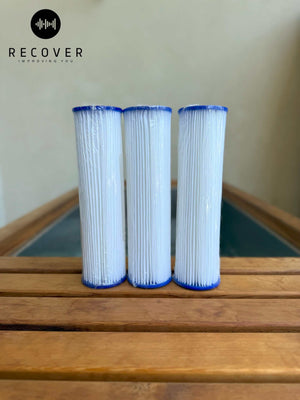
2. Add a Pre-Filter Before Filling the Ice Bath
Ice baths require better water preparation than normal household use.
Minimum recommendation:
Best setup:
- Sediment + carbon filtration
- Optional UV sterilisation for long-term reuse
This stops contaminants before they ever enter the system.
3. Flush the Tap Before Filling
A simple habit:
- Run water for 30–60 seconds
- Especially after periods of low use
This clears settled debris from the plumbing.
4. Maintain Ice Bath Filtration Properly
Even clean incoming water needs ongoing support:
- Change filters regularly (often every 30–60 days in UAE conditions)
- Avoid warm, stagnant water sitting in the tub
- Keep circulation running where possible
Dirty source water overloads filters and shortens chiller lifespan.
Why This Matters for Your Ice Bath?
Dirty water doesn’t just affect appearance:
- It impacts hygiene
- Increases maintenance
- Shortens filter and chiller lifespan
- Reduces the recovery experience
Clear water isn’t cosmetic — it’s functional.
Final Takeaway
If your ice bath water looks dirty in the UAE:
- The issue is almost always upstream
- Storage tanks and filtration are the real factors
- The solution is straightforward and proven
With the right setup, ice baths in the UAE can stay crystal clear, hygienic, and low-maintenance year-round.









Leave a comment
This site is protected by hCaptcha and the hCaptcha Privacy Policy and Terms of Service apply.