

Practical Stress Management, Recovery Tools & Nervous System Control in the UAE
Taking Back Control When Everything Around You Feels Uncertain
There are moments where stress feels manageable. Predictable. Contained.
And then there are moments like this.
Rising geopolitical tension. Constant news cycles. School disruptions. Travel uncertainty. Conversations that feel heavier than usual.
For many, stress isn’t just what’s happening here— it’s what’s happening back home.
A constant, low-level hum of “what if.”
This isn’t the kind of stress you fix with a single workout or a good night’s sleep.
This is a full-system load—on your mind, your body, your nervous system.
And the most important thing to understand is:
You don’t remove the stress. You build the capacity to handle it.
Why This Feels Different in the UAE?
Life here already runs at a high pace.
- Long working hours
- Heat limiting time outdoors
- Heavy reliance on indoor, screen-based environments
- Frequent travel and disruption to routine
But there’s another layer that’s often overlooked. For many people here, family isn’t in the same place.
They’re spread across different countries, time zones, and sometimes directly affected by what’s happening.
Which means stress isn’t just local—it’s:
- Messages coming in at all hours
- Concern for family back home
- A constant awareness of situations you can’t directly influence
That adds a different kind of weight.
One that sits in the background, but never fully switches off. When external stress layers on top of that, it compounds quickly.
Which is why intentional recovery and stress management tools aren’t optional—they’re necessary.
Control What You Can
When the external environment becomes unpredictable, your mind looks for certainty.
If it can’t find it, it creates noise—overthinking, anxiety, distraction.
The solution isn’t to ignore what’s happening. It’s to create structure where you can.
Start simple:
- Fix your wake-up time
- Anchor your day with a repeatable routine
- Reduce unnecessary decisions
- Stay informed—but don’t stay immersed
Because once your baseline is stable, everything else becomes easier to manage.
When Stress Spikes — What To Do in the Moment?
There will be moments where everything feels heightened.
Instead of trying to think your way out of it, follow a simple reset:
-
Control your breathing: Inhale through your nose, slow exhale through your mouth (longer than the inhale)
Do this for 2–3 minutes - Change your environment: Step outside. Walk. Get fresh air
- Cold exposure (if available): Even 30–60 seconds of cold water can reset your state
- Move your body: Short walk, light exercise—anything to shift your state
You don’t need the perfect solution. You just need to interrupt the spike.
Move Daily — Burn Off What Your Brain Can’t Process
Stress doesn’t just sit in your head—it builds in the body.
That tension you feel?
It’s often unspent energy in the nervous system.
Daily movement helps clear it:
- Strength training → builds resilience and control
- Zone 2 cardio → stabilises mood and energy
- Walking outdoors → brings your system back down
You don’t need extremes. But you do need consistency.
Use Cold Exposure to Build Stress Control
Cold exposure gives you something rare right now:
A controlled stressor in an uncontrolled environment.
When you step into cold water:
- Your heart rate spikes
- Your breathing becomes challenged
- Your mind wants to escape
And then—you bring it back under control.
That process trains:
- Emotional regulation
- Stress tolerance
- Calm under pressure
It’s not just physical. It’s a direct practice of staying composed when things feel uncomfortable.
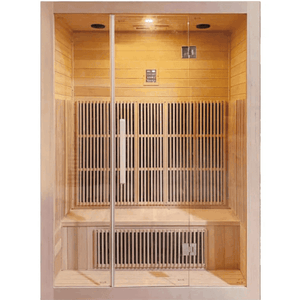
Use Sauna Therapy to Relax and Recover
If cold builds control, heat creates release.
Sauna therapy allows your system to:
- Downregulate after stress
- Improve circulation and recovery
- Support deeper sleep
- Create mental space again
Most people stay “on” all day without realising it. Heat gives your body a signal it rarely gets:
You can relax now.
Breathwork — Your Fastest Stress Reset Tool
When stress rises, your breathing changes first. Shallow. Fast. Reactive.
Shift your breathing, and you shift your state.
Simple tools:
-
Physiological sigh → immediate calm
-
Box breathing → regain control
- Long exhale breathing → reduce anxiety
No equipment. No setup.
Just something you can rely on anywhere.
Nutrition — Stabilise, Don’t Stimulate
Stress pushes people toward:
- More caffeine
- More sugar
- Less structure
- More alcohol
All of which make things worse over time.
Instead:
- Prioritise protein at every meal
- Stay hydrated (especially in UAE heat)
- Add electrolytes to support your system
- Keep meals simple and consistent
Food becomes either fuel for stability—or fuel for volatility. Choose accordingly.
Supplements — Support the Nervous System
You don’t need a long list.
But a few well-chosen additions can help stabilise your baseline:
- Magnesium (Glycinate): Supports relaxation, nervous system regulation, and sleep quality.
- Electrolytes: Support hydration, nerve function, and energy stability—especially important in the UAE climate.
- Omega-3 (Fish Oil): Supports brain function, mood, and long-term health.
- Ashwagandha: Helps regulate the stress response and reduce anxiety over time.
- L-Theanine: Promotes calm focus and reduces stress-related tension.
- Vitamin D3 + K2: Supports mood, immune health, and overall balance.
Keep it simple:
- Magnesium
- Electrolytes
- Omega-3
Then add more if needed.
What to Avoid? (If You Want to Stay in Control)
Stress management is also about what you remove:
-
Alcohol → disrupts sleep and increases anxiety
-
Excess caffeine → increases nervous system stress
-
Constant news consumption → keeps your system activated
-
Poor sleep habits → reduces recovery
- Processed foods → affect energy and mood
Reducing these creates immediate improvement.
Be More Present, Less Reactive
It’s easy to get stuck in a loop of checking, reacting, and worrying.
But most of that doesn’t give you control. It keeps your system on edge.
Instead:
- Stay informed—but not immersed
- Focus on your environment
- Bring attention back to what you can control
Being present doesn’t mean ignoring reality. It means not letting it control your entire day.
Build a Simple Daily Reset Routine
You don’t need perfection. You need structure.
A simple framework:
-
Morning → light exposure + movement
-
Midday → focused work + limited input
-
Afternoon → training or walking
-
Evening → sauna, breathwork, relaxation
- 2–4x per week → cold exposure
This creates stability even when everything else feels uncertain.
Final Thought: Resilience Is Built
There’s no perfect way to handle stress. But there is a better way to respond.
Every time you:
- Move your body
- Control your breathing
- Step into discomfort
- Prioritise recovery
- Choose stability over chaos
You’re not just coping. You’re building resilience.
Where Recover Fits In?
At Recover, we don’t see ice baths and saunas as luxury products.
They are recovery tools for stress, sleep, and performance.
Tools that help you:
- Regulate your nervous system
- Improve sleep quality
- Build resilience
- Stay mentally and physically sharp
Because when everything else feels uncertain, your ability to manage yourself becomes your biggest advantage.









Leave a comment
This site is protected by hCaptcha and the hCaptcha Privacy Policy and Terms of Service apply.