

Quick Answer
Infrared sauna detox is a popular claim, but sweat is not your body's main way of removing toxins. Your liver and kidneys do that job. What an infrared sauna does offer is real: better circulation, deep relaxation, a mild heat-stress workout for your heart, and a genuinely useful part of a recovery routine. It's a benefit worth having, just not the one most people think they're getting.
Search for infrared sauna detox online and you will find thousands of posts promising the same thing. Sweat it out. Flush the toxins. Reset your body.
It sounds convincing. You sit in the heat, you sweat, and you feel lighter afterwards. Something must be leaving your body, right?
This idea has been around for years, long before infrared panels became popular. Traditional saunas, steam rooms and sweat lodges have all carried some version of the same promise across different cultures and generations.
The truth is a little more complicated. Some of it is fact. Some of it is fiction. And the real infrared sauna benefits are often more interesting than the detox story itself.
In this guide, we will look at what actually happens in your body during a session, what your sweat really contains, and why people still walk out feeling so good.
We will also cover how infrared sauna compares with a traditional sauna, and how to build it into your week in a way that actually supports real recovery, not just a marketing promise.
None of this means infrared sauna is a waste of time. Far from it. It just means the real story is different from the one on your social media feed.
[[product:ultimate-outdoor-sauna-with-integrated-shower]]
What Does “Detox” Actually Mean?
The word detox gets used loosely. In wellness marketing, it usually means removing built-up toxins through sweat, juice cleanses or restrictive diets.
In biology, detoxification is a specific, ongoing process. It happens inside your organs, every single day, whether you sauna or not.
Your Liver and Kidneys Do the Real Work
Your liver breaks down waste products, medications and by-products of digestion. Your kidneys filter your blood and remove what your body does not need through urine.
These two organs are built for this job. They work around the clock, with or without a sauna session.
Sweat, by comparison, is mostly water and salt. It plays a role in cooling your body down, not in filtering your blood.
Even your skin plays a minor supporting role, but it was never designed to be your primary detox organ. That job belongs firmly to your liver and kidneys, working continuously in the background.
This is worth remembering whenever a wellness trend promises a dramatic detox through sweat alone. Your body is already handling the heavy lifting, sauna or no sauna.
This doesn't mean sweating serves no purpose beyond cooling. It's simply not the powerful detox pathway that popular wellness content often claims it to be.
What Happens to Your Body in an Infrared Sauna?
An infrared sauna does not heat the air around you the way a traditional sauna does. Instead, infrared light warms your body directly, often at a lower air temperature.
This still raises your core body temperature. And that is where the real, measurable effects begin.
Sweat: What's Really in It?
Sweat is around 99 percent water and salt. Small traces of other substances, including some minerals, do appear in sweat.
But the amounts are tiny compared with what your liver and kidneys process. Sweating is a cooling mechanism first, and a minor, secondary pathway at best for anything else.
This is a useful distinction to keep in mind. The presence of a substance in sweat does not automatically mean sweating is an efficient or meaningful way of removing it from your body.
Heat Stress and Circulation
As your body heats up, your heart rate rises and blood vessels near your skin widen. This is similar, in a mild way, to the cardiovascular response you get from light exercise.
Over repeated sessions, this heat stress response has been linked to improved circulation and a feeling of cardiovascular ease, which is one of the genuine infrared sauna benefits worth paying attention to.
Sweat Rate and Hydration
Because infrared heat penetrates the body directly, many people sweat heavily even at a lower air temperature than a traditional sauna.
This makes hydration essential. Drink water before and after every session, and consider electrolytes if you are sweating heavily or training on the same day.
Some people find infrared heat more comfortable than a traditional sauna precisely because the air temperature is lower, even while the body still receives a strong heat stimulus.
This is one reason infrared sauna has become popular for people who find traditional saunas too intense to sit in for a full session.
[[product:indoor-sauna]]
So Where Do Infrared Sauna Benefits Actually Come From?
If it is not detox, why do people feel so good after a session? The answer is simpler than the marketing suggests.
Relaxation, Recovery and Better Sleep
Heat exposure encourages your nervous system to shift into a calmer state. Many people describe feeling looser, calmer and more ready for sleep after an evening session.
Combined with the circulation benefits from heat stress, this makes infrared sauna a genuinely useful recovery tool, particularly when paired with training or a busy week.
Many people also notice their breathing feels easier during and after a session, likely related to the warmth and relaxation response rather than any dramatic change in lung function.
A consistent evening sauna habit can also help mark the transition from an active day into a calmer, more restful evening, which supports better sleep over time.
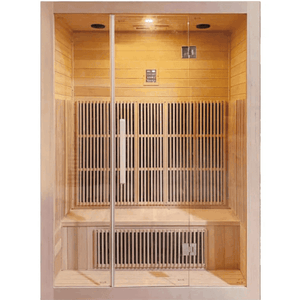
If you're building this into your weekly routine, our range of home saunas includes the Indoor Infrared Sauna for exactly this kind of consistent, at-home use.
Using Infrared Sauna Safely and Consistently
- Start with 15 to 20 minute sessions and build up gradually.
- Hydrate before, during and after every session.
- Avoid alcohol before a sauna session.
- Step out immediately if you feel dizzy or unwell.
- Aim for consistency over intensity, three to four sessions a week is plenty for most people.
Pairing Infrared Sauna With Real Recovery Habits
Infrared sauna works best as one part of a wider recovery routine, not a replacement for sleep, hydration or good nutrition.
Many people pair a sauna session with cold exposure from our ice bath range as part of a full contrast therapy routine. Our guide on what contrast therapy is explains how the two work together.
None of this is detox in the way the marketing suggests. But relaxation, circulation and better recovery are real, worthwhile benefits in their own right.
Some people also report clearer skin after regular sessions, likely linked to increased circulation and sweating opening pores, rather than any dramatic toxin removal.
The honest version of the infrared sauna story is still a good one. It's just a different story from the one most marketing tells.
[[product:recover-architectural-full-spectrum-infrared-sauna]]
Frequently Asked Questions
Does infrared sauna really remove toxins from the body?
Not in any significant way. Your liver and kidneys handle the vast majority of detoxification, working continuously regardless of whether you sauna. Sweat is mostly water and salt, with only trace amounts of anything else, so it plays a minor, supporting role at most.
How often should I use an infrared sauna?
Three to four sessions a week of 15 to 20 minutes is a reasonable starting point for most people. Some people build up to daily use over time. Always listen to your body, stay well hydrated, and increase frequency gradually rather than jumping straight into daily sessions.
Is infrared sauna better than a traditional sauna for detox?
Neither is significantly better for detox, since sweating is not a major detox pathway either way. Infrared sauna does allow a similar heat stress response at a lower air temperature, which some people find more comfortable for longer sessions.
Can I lose weight from sweating in an infrared sauna?
Any weight lost during a session is mostly water weight, which returns once you rehydrate. Sauna use is not a substitute for diet and exercise when it comes to genuine, lasting fat loss, though it can be a useful part of an overall healthy routine.
Is infrared sauna safe to use every day?
Many people use infrared sauna daily without issue, but it depends on your health, hydration and how your body responds. If you have a medical condition, are pregnant, or take medication that affects heat tolerance, check with your doctor first.
The Real Takeaway
Infrared sauna detox makes for a catchy headline, but it is not the full story. Your body already has a highly effective detox system, and it does not need sweat to do its job.
What infrared sauna genuinely offers is relaxation, improved circulation, and a valuable place in a consistent recovery routine. That is a good enough reason to use one, without needing to call it a detox.
[[product:outdoor-infrared-sauna-available-in-dubai-abu-dhabi]]
Ready to build heat into your recovery routine? Explore our Indoor Infrared Sauna and Outdoor Sauna, or read why sauna and ice bath together support mental health.










Leave a comment
This site is protected by hCaptcha and the hCaptcha Privacy Policy and Terms of Service apply.