

Hyperbaric oxygen therapy (HBOT) has become one of the most discussed technologies in recovery, performance, and longevity circles — used by professional athletes, executives, wellness clinics, and health-conscious individuals across the UAE and globally.
Yet despite the growing interest, hyperbaric chambers remain one of the most misunderstood wellness investments available today.
Some people assume they are simply expensive oxygen delivery devices. Others expect dramatic results after a single session. Many become confused by technical specifications — ATA ratings, oxygen percentages, soft versus hard shell, clinical versus home use.
The reality is both simpler and more interesting than the marketing often suggests.
🔍 Quick Answer
Hyperbaric oxygen therapy works by increasing atmospheric pressure around the body, allowing tissues to absorb more oxygen than under normal conditions. Benefits build with consistent use — most users notice meaningful improvements in recovery, sleep quality, and mental clarity within 2–4 weeks of regular sessions. It is not a single-session fix; it is a consistent wellness practice.
How Hyperbaric Oxygen Therapy Actually Works?
A hyperbaric chamber creates a pressurised environment around the body. As pressure increases, the body can dissolve and utilise significantly more oxygen than it can at normal atmospheric pressure — not just in the blood, but throughout plasma, cerebrospinal fluid, and other tissues that red blood cells cannot easily reach.
How Oxygen Is Delivered?
Most wellness and home hyperbaric systems pressurise the chamber using filtered ambient air from the surrounding environment. An oxygen concentrator then strips nitrogen from that same air, increasing the oxygen concentration breathed by the user through a mask or hood.
To understand the process clearly:
- Normal atmospheric air contains approximately 21% oxygen
- The concentrator draws in ambient air
- Nitrogen is filtered and removed
- The resulting oxygen-enriched air (typically 93–95%) is delivered to the user
- Increased pressure means this higher-concentration oxygen is absorbed more efficiently by body tissues
The oxygen is not being created from nothing. It is being concentrated from what is already present in the atmosphere — similar to how a water filter refines rather than generates water.
Why Pressure Matters as Much as Oxygen Percentage
Oxygen percentages dominate hyperbaric marketing, but pressure is equally — if not more — important. Pressure is what allows oxygen to dissolve into plasma and reach tissues beyond normal red blood cell delivery. Two chambers both advertising "95% oxygen delivery" can produce meaningfully different physiological outcomes based on their pressure capability.
A hyperbaric chamber should always be evaluated as a complete system — pressure, oxygen delivery, comfort, reliability, and session consistency all interact to determine the overall therapeutic value.
What Does a Hyperbaric Session Actually Feel Like?
For first-time users, the most common surprise is how relaxing the experience is.
During pressurisation, the most noticeable physical sensation is pressure equalisation in the ears — similar to what many people experience during aircraft take-off or landing. This is easily managed by swallowing, yawning, or gently equalising.
Once the chamber reaches operating pressure, most users:
- Feel calm and relaxed
- Read, listen to music, or watch content
- Meditate or simply rest
- Some users fall asleep entirely during longer sessions
Unlike cold plunge therapy or high-intensity exercise, hyperbaric therapy produces no immediate dramatic physical sensation. The benefits are cumulative and tend to become more noticeable as sessions accumulate — which is one of the most important things to understand before investing.
What Benefits Do Regular Users Most Commonly Report?
|
Benefit Category |
Commonly Reported Experiences |
Typical Onset |
|
Physical Recovery |
Reduced muscle soreness, faster post-training recovery, less fatigue |
Weeks 1–2 |
|
Sleep Quality |
Falling asleep more easily, deeper sleep, feeling more refreshed on waking |
Week 1–2 (often earliest noticed) |
|
Mental Clarity |
Better focus, reduced brain fog, more stable energy, improved productivity |
Weeks 2–3 |
|
General Wellbeing |
Greater resilience to stress, more consistent daily energy, improved mood |
Weeks 3–4+ |
|
Longevity / Performance |
Improved training readiness, recovery capacity, physical and cognitive baseline |
Month 1–2+ |
Recovery
The most common initial reason people explore HBOT is as a recovery tool. Regular users — particularly athletes and active individuals — frequently report:
- Reduced delayed onset muscle soreness (DOMS) after training
- Improved readiness for subsequent training sessions
- Reduced physical fatigue accumulation across a demanding week
- Faster return to baseline after high-volume training blocks
This has made hyperbaric chambers increasingly common in elite sports environments, high-performance gyms, and serious amateur training setups across Dubai and Abu Dhabi.
Sleep Quality
Sleep improvements are often among the earliest reported benefits — and for many users, they become the most valued.
Common experiences include:
- Falling asleep faster with less mental "wind-down" time required
- Deeper, more restorative sleep with fewer night wakings
- Waking feeling more refreshed and mentally ready
- Improved overnight recovery as measured by HRV on wearables
For users in high-stress UAE environments — demanding professional schedules, frequent travel, irregular sleep patterns — sleep improvement often becomes the foundation for improvements across every other category.
Mental Clarity and Cognitive Performance
A growing segment of HBOT users are professionals, executives, and entrepreneurs who primarily value the cognitive benefits:
- Noticeably sharper focus and concentration during work sessions
- Reduced mental fatigue and 'afternoon slump' severity
- More stable and sustained mental energy across longer working days
- Improved decision-making speed and quality under pressure
This has contributed to significant interest in HBOT among the business community in Dubai — where competitive performance demands high sustained cognitive output.
What to Expect in Your First 30 Days: A Realistic Timeline?
|
Phase |
What Most Users Experience |
What to Focus On |
|
Week 1 — Orientation |
Learning ear equalisation; deep relaxation; improved sleep quality; sense of calm |
Establish routine; prioritise consistency over session length |
|
Weeks 2–3 — Early Benefits |
Better post-training recovery; more consistent energy; reduced fatigue; emerging mental clarity |
Track changes — HRV, sleep scores, energy levels, training performance |
|
Week 4 — Building Momentum |
Clearer before/after contrast; hyperbaric becoming integrated into routine; sustained wellbeing improvements |
Review progress; optimise session frequency and timing for your lifestyle |
|
Month 2+ — Long-Term Value |
Greater resilience to stress; measurably better recovery capacity; cognitive and physical baseline improvement |
Combine with broader wellness practices for compounded results |
⚡ Key Principle
Like strength training, sauna use, or cold exposure — hyperbaric therapy delivers its greatest value through consistent, regular practice. Results from a single session are minimal. Results from 20–30 consistent sessions within a structured routine can be significant.
Understanding Chamber Types and Pressure Levels
Not all hyperbaric chambers are equal. Pressure capability directly affects the therapeutic potential of the session.
|
Chamber Type |
Typical Pressure |
Common Use Case |
Notes |
|
Mild Hyperbaric (Inflatable) |
1.3–1.4 ATA |
Home wellness, entry-level recovery |
Portable; accessible entry point; lower pressure ceiling |
|
Advanced Soft Shell |
1.5 ATA |
Home use with greater therapeutic potential |
Higher capability than mild chambers; practical for home |
|
Hard Shell (Professional) |
1.5–2.0 ATA |
Recovery centres, serious home users |
Greater pressure capability; superior comfort and reliability |
|
Clinical Hard Shell |
2.0–2.4+ ATA |
Medical and clinical applications |
Highest therapeutic pressure; clinical-grade engineering |
For wellness-focused home use in the UAE, the most commonly selected options are mild inflatable chambers (1.3–1.4 ATA) and professional soft or hard shell systems at 1.5 ATA. The right choice depends on your goals, available space, budget, and intended frequency of use.
Hyperbaric Therapy Works Best as Part of a Broader Recovery Strategy
One of the most important mindset shifts for new HBOT users is understanding that hyperbaric therapy amplifies a healthy lifestyle — it does not replace one.
The greatest results consistently come when it is integrated with:
- Consistent quality sleep and fixed sleep/wake timing
- Regular exercise and structured recovery protocols
- Good nutritional habits and adequate hydration
- Stress management practices
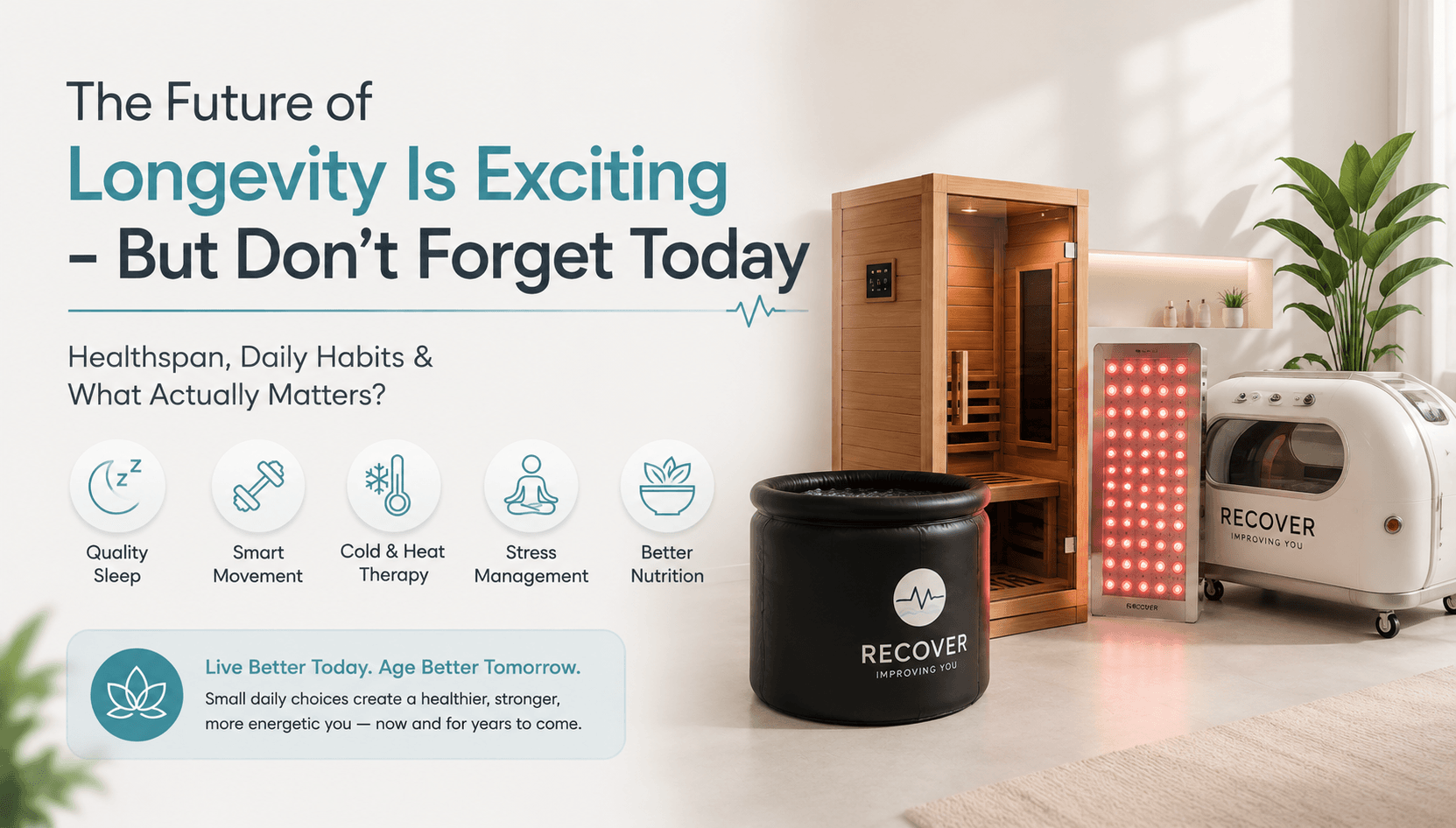
- Complementary recovery tools such as infrared sauna and cold therapy
Users who treat hyperbaric therapy as a single-solution shortcut typically see limited results. Users who integrate it as part of a broader, consistent recovery and wellness system report the most meaningful long-term improvements.








Leave a comment
This site is protected by hCaptcha and the hCaptcha Privacy Policy and Terms of Service apply.