

Quick Answer
A hyperbaric chamber is a sealed unit that increases air pressure above normal levels, usually described in ATA, or atmospheres absolute. Inside, you breathe in an environment with more available oxygen than at normal pressure, which allows more oxygen to dissolve into your blood plasma. Home and wellness chambers typically run at mild pressures between 1.1 and 1.5 ATA. Sessions are calm, sealed but not claustrophobic, and usually last between 45 and 90 minutes, often used to support recovery, energy and general wellness.
The words hyperbaric chamber can sound intimidating. Pressurised air. Sealed capsules. Something you imagine in a hospital, not a bedroom.
But home and wellness hyperbaric chambers have become far more common, and far less intense than most people expect.
Interest has grown quickly among athletes, biohackers and everyday people looking for another tool to support recovery, energy and general wellbeing.
So what actually happens once you're inside? Let's walk through it, step by step.
By the end of this guide, the process should feel far more ordinary than intimidating, closer to a calm rest session than anything clinical.
We'll cover the pressure levels involved, what a typical session actually feels like, and what people genuinely use hyperbaric chambers for at home.
[[product:44d-2-ata-hyperbaric-chamber-walk-in-oxygen-therapy]]
What Is a Hyperbaric Chamber, Really?
A hyperbaric chamber is a sealed space, usually built from reinforced fabric or hard shell material, that increases the air pressure around your body above normal atmospheric levels.
This process is called hyperbaric oxygen therapy, or HBOT for short.
Understanding ATA and Pressure Levels
Pressure inside a chamber is measured in ATA, which stands for atmospheres absolute. Normal sea-level pressure is 1.0 ATA.
Medical hyperbaric chambers, used for serious conditions like decompression sickness, can run as high as 2.0 to 3.0 ATA under clinical supervision.
Home and wellness chambers work at much gentler levels, typically between 1.1 and 1.5 ATA. This is often described as mild hyperbaric therapy.
This distinction matters. A wellness chamber at 1.3 ATA is a very different experience from a clinical chamber running at 2.4 ATA under medical supervision for a specific condition.
Most people considering a home chamber are looking at the gentler end of this range, which is designed for regular, comfortable, everyday use rather than treating a specific medical diagnosis.
Step by Step: What Happens During a Session?
Understanding the actual process makes the experience feel far less mysterious.
Getting In and Sealing the Chamber
You climb into the chamber, usually lying down or sitting, depending on the model. The chamber is then sealed using a zipper system.
Air begins to fill the chamber gradually, raising the pressure in a slow, controlled way rather than all at once.
This gradual approach is deliberate. A slow rise in pressure gives your body, and particularly your ears and sinuses, time to adjust comfortably rather than experiencing a sudden change.
What You'll Feel as Pressure Rises?
As pressure increases, most people feel a sensation similar to descending in an aeroplane or driving down a mountain. Your ears may need to equalise, much like on a flight.
This is a normal part of hyperbaric oxygen therapy, and most chambers include simple guidance on how to clear your ears comfortably.
If you've ever flown on a plane, this sensation will feel familiar. Swallowing, yawning or gently pinching your nose and blowing can all help equalise pressure in your ears.
Breathing and Oxygen Absorption
Once at target pressure, you simply breathe normally inside the chamber. The increased pressure allows more oxygen to dissolve directly into your blood plasma, beyond what your red blood cells alone can carry.
This extra circulating oxygen is the core mechanism behind hyperbaric therapy's role in supporting recovery, healing and general wellness.
Once your session ends, the chamber depressurises slowly, following the same gradual approach used to bring you up to pressure. Most people feel calm, relaxed and sometimes noticeably more alert afterwards.
There's no recovery time needed once you step out. You can carry on with your day as normal, which is part of why it fits so easily into a home routine.
[[product:recover-shell-hyperbaric-chamber]]
What People Actually Use Hyperbaric Chambers For?
Interest in hyperbaric chambers has grown well beyond clinical use, particularly among people focused on recovery and everyday performance.
Common Reasons People Use a Home Chamber
- Supporting recovery after intense training or travel
- General energy and wellness routines
- Complementing an existing recovery stack alongside sauna, cold plunge or red light therapy
- Unwinding in a calm, sealed environment for 45 to 90 minutes
For many people, the appeal isn't a single dramatic result. It's the ability to add one more consistent, low-effort input into an already busy recovery routine, without needing to travel anywhere or book an appointment.
Athletes in particular have driven much of the recent interest, often using a session the evening after hard training or a long flight, when the body has plenty to recover from.
Session Length and What to Expect
A typical mild hyperbaric session lasts between 45 and 90 minutes. Many people read, listen to music or simply rest during this time.
The chamber is sealed but not dark or silent, and most models include a clear viewing panel, so claustrophobia is rarely an issue at these gentler pressure levels.
Is It Safe to Use at Home?
Modern home hyperbaric chambers are built with safety features including pressure monitoring, safety zippers and smart controls.
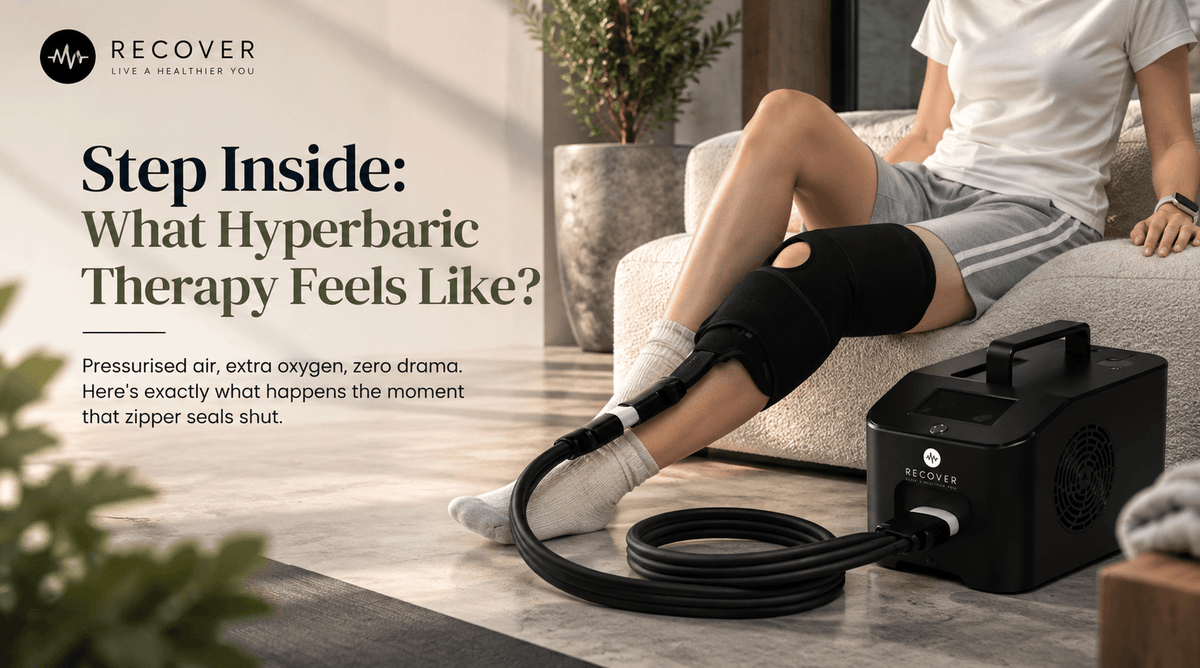
The Recover Portable Hyperbaric Chamber operates at a gentle 1.1 to 1.5 ATA, with medical-grade construction, reinforced seams and a built-in cooling system for safe, daily home use.
As with any recovery equipment, it's worth checking with a doctor first if you have a specific medical condition, are pregnant, or have ever had issues with your ears or sinuses.
It's also worth introducing yourself to a chamber gradually. Your first few sessions are a good time to learn how your ears respond to pressure changes, before settling into a longer, regular routine.
Many people find that after two or three sessions, the process starts to feel completely routine, no different from settling in for a rest or a short nap.
Frequently Asked Questions
What does ATA mean in a hyperbaric chamber?
ATA stands for atmospheres absolute, a way of measuring pressure. Normal sea-level pressure is 1.0 ATA. Home hyperbaric chambers typically run between 1.1 and 1.5 ATA, a gentle, mild range compared with clinical medical chambers.
Does it hurt to be inside a hyperbaric chamber?
No, but you may feel ear pressure similar to a flight as pressure rises. Most people learn to equalise their ears comfortably within the first few sessions, using the same swallowing or yawning technique used on an aeroplane.
How long does a hyperbaric chamber session last?
Most home and wellness sessions last between 45 and 90 minutes, though this can vary depending on the chamber and your personal routine. Many people use the time to rest, read or simply relax.
Is a home hyperbaric chamber the same as a hospital one?
No. Hospital chambers used for medical conditions often run at much higher pressures under clinical supervision, sometimes involving pure oxygen. Home chambers use gentler, mild pressure levels designed for general recovery and wellness, not the treatment of a specific diagnosis.
Can I use a hyperbaric chamber every day?
Many people do use mild hyperbaric therapy daily as part of a regular routine, but it's worth starting gradually and checking with a doctor if you have any underlying health concerns, particularly related to your ears, sinuses or lungs.
The Bottom Line
A hyperbaric chamber is far less intimidating in practice than the name suggests. It's a sealed, pressurised space that helps more oxygen reach your blood, used by everyday people as part of a wider recovery and wellness routine.
Understanding the ATA levels, the sealing process and what your body actually experiences takes away most of the mystery, and most of the anxiety, around trying one for yourself.
Most people who try a home chamber describe their first session as far more ordinary than they expected, a quiet, restful 45 to 90 minutes rather than anything clinical or overwhelming.
[[product:recover-portable-hyperbaric-chamber]]
As with any recovery tool, the real benefit comes from making it part of a routine rather than a one-off experiment. A single session might feel pleasant, but it's the repeated, regular use over weeks and months that most people find genuinely worthwhile.
Explore the Recover Portable Hyperbaric Chamber to see how mild hyperbaric therapy could fit into your own recovery routine.








Leave a comment
This site is protected by hCaptcha and the hCaptcha Privacy Policy and Terms of Service apply.