
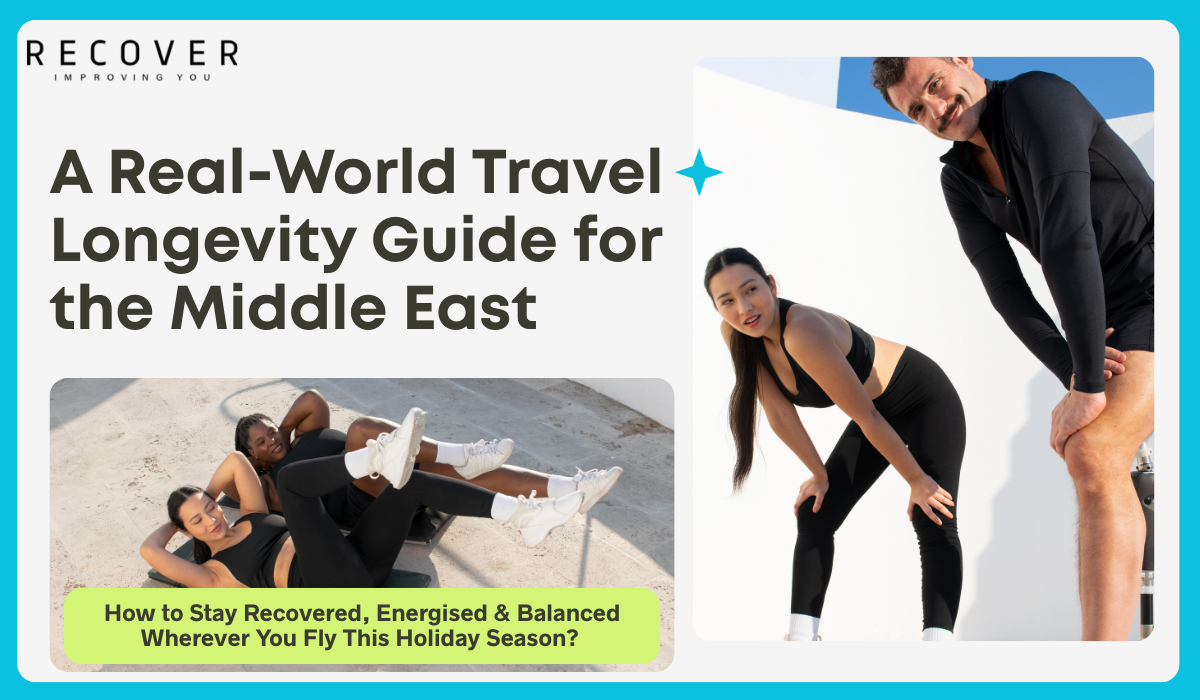
How to Stay Recovered, Energised & Balanced Wherever You Fly This Holiday Season?
This guide is written for people in the Middle East, especially those in Dubai, Abu Dhabi, Saudi Arabia, Bahrain, Qatar, who want to maintain energy, sleep quality, recovery, and wellness while traveling during the holiday season.
Introduction
Not everyone flies back to cold, dark Europe for the holidays.
Some people head east into bright, humid cities.
Others go south into long, warm days.
Others fly west into heavy time-zone shifts.
Where you travel massively impacts your biology.
Temperature, daylight exposure, humidity, and time zones all change how you feel, sleep, eat, train, and recover.
This is your Recover Middle East Travel Longevity Guide — designed for people who want to stay energised and balanced on every trip, with simple strategies that support sleep, circadian rhythm, hydration, recovery, and immune health.
Whether you're visiting family, travelling for work, or taking a well-deserved holiday, this guide keeps you performing — and feeling — your best.
1. Before You Fly: The Universal Travel Protocol
No matter where you’re going — cold, hot, dark, bright — the rules before you fly are the same.
These are the foundations that protect your sleep, energy, hydration, and recovery.
Hydrate with intention
Flying dehydrates you faster than the Dubai summer.
Drink 500–750 ml water with electrolytes in the hours before take-off.
Move before the airport
5–10 minutes of mobility improves circulation and prevents mid-flight stiffness.
Eat light
Your body digests poorly under pressure and altitude, so save heavy meals for after landing.
Avoid pre-flight alcohol
Alcohol at altitude hits twice as hard and destroys sleep.
Protect your circadian rhythm
Use:
- blue-light filters
- an eye mask
- hydration
- reduced late-flight screen time
These reduce jet lag and keep your sleep cycle steady.
2. Travelling to Cold or Dark Destinations
(UK, Northern Europe, Canada, Northern US)
This is the most common December travel pattern from the UAE and Middle East.
Main challenge:
Cold air + low daylight wreck circadian rhythm and mood.
You feel:
● groggy
● hungrier
● more inflamed
● less motivated
● sleepy during the day
● wired at night
How to adapt quickly?
- Seek daylight immediately: 10 minutes of natural morning light resets your sleep cycle.
- Use gentle cold exposure: Short cold showers help boost dopamine and energy.
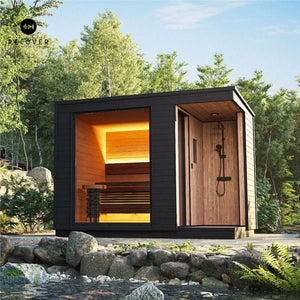
- Prioritise warm evenings: Saunas, warm baths, or heat therapy improve sleep after dark winter days.
- Front-load protein: Stabilises blood sugar and prevents mood swings.
- Expect more carb cravings: It’s a light-deficiency effect, not lack of discipline.
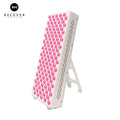
Recover recommendation:: Infrared heat before bed supports melatonin production and nervous system calm.
3. Travelling to Bright or Warm Destinations
(Thailand, Bali, Maldives, Australia, Southeast Asia)
These trips bring different biological stressors.
Main challenge: Humidity + long daylight = overstimulation + elevated heart rate + poor sleep.
How to adapt?
- Manage overheating: Hydration + electrolytes are non-negotiable.
- Prioritise morning light: Sets your circadian rhythm without afternoon heat fatigue.
- Use cold exposure: Restores dopamine and mood after hot days.
- Keep sleep cool: Use AC or a cold shower to improve REM sleep.
- Expect energy swings: Bright, humid environments activate alertness pathways.
Recover recommendation: Cold therapy becomes crucial for reducing inflammation and preventing burnout.
4. Travelling West — Into Long Time-Zone Shifts
(US, South America, Caribbean)
Time-zone disruption is the biggest threat to sleep, recovery, and hormonal balance.
Your strategy
- Adjust before you fly: Shift sleep earlier or later 60–90 minutes.
- Avoid screens late in the flight: Blue light preserves UAE time in your brain.
- Move immediately after landing: Walking is the #1 circadian reset tool.
-
Use heat & cold intentionally
Heat at night → calm
Cold in morning → alert - Avoid naps on day 1: They delay time-zone adjustment by up to 48 hours.
Recover recommendation: Sauna + ice bath contrast session on night one dramatically reduces jet lag.
5. Travelling South
(Mauritius, Seychelles, South Africa, Sri Lanka)
Expect warm evenings + bright days + strong UV.
Main challenge: Light excess increases stress hormones and delays sleep.
How to adapt?
- Protect your evenings: Dim lights; avoid stimulating environments.
- Move early: Morning movement → better sleep.
- Eat earlier: Heat + large meals = poor sleep.
- Cold exposure for mood: Restores dopamine drained by heat.
- Electrolytes twice daily: Humidity depletes minerals fast.
6. Travelling to Mixed-Climate Cities
(Japan, Korea, China)
These destinations involve extreme variation — cold outdoors, heated indoors, and bright city lights.
Main challenge: Temperature swings + night-time overstimulation.
How to adapt?
- Layer clothing: Avoid sudden hot/cold shocks.
- Prioritise natural morning light: Counteracts bright neon nights.
- Warm evening routine: Sauna or heat therapy calms the nervous system.
- Don’t over-train early: Jet lag + overstimulation = cortisol crash.
- Hydrate frequently: Cold air reduces thirst awareness.
7. When You Return to the Middle East
Your body is shifting climate, humidity, light patterns, time zones, food, and sleep rhythms all at once.
Your re-entry protocol
- Morning light — 10 minutes: This is the biggest circadian lever.
- Avoid intense training for 48 hours: Your nervous system needs recalibration.
- Heat + cold same day: 10–15 min sauna → 1–2 min ice bath.
- Hydrate aggressively: Mineral balance crashes post-travel.
- Sleep early: Anchors your rhythms quickly.
Final Thoughts
Travelling doesn’t have to age you or destroy your routine.
When you understand how light, temperature, hydration, and circadian timing shift in each destination, you can adapt quickly and intelligently.
That’s what real longevity looks like:
Not perfection… but adaptability.
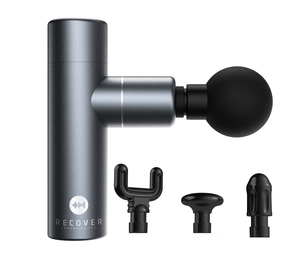
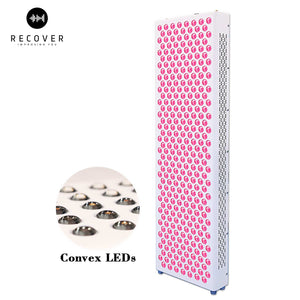
And the tools we build at Recover — heat therapy, cold therapy, red light therapy, breathwork, and circadian rhythm support — are designed exactly for this.








Leave a comment
This site is protected by hCaptcha and the hCaptcha Privacy Policy and Terms of Service apply.